

Water spots on car paint: how can you remove them safely?
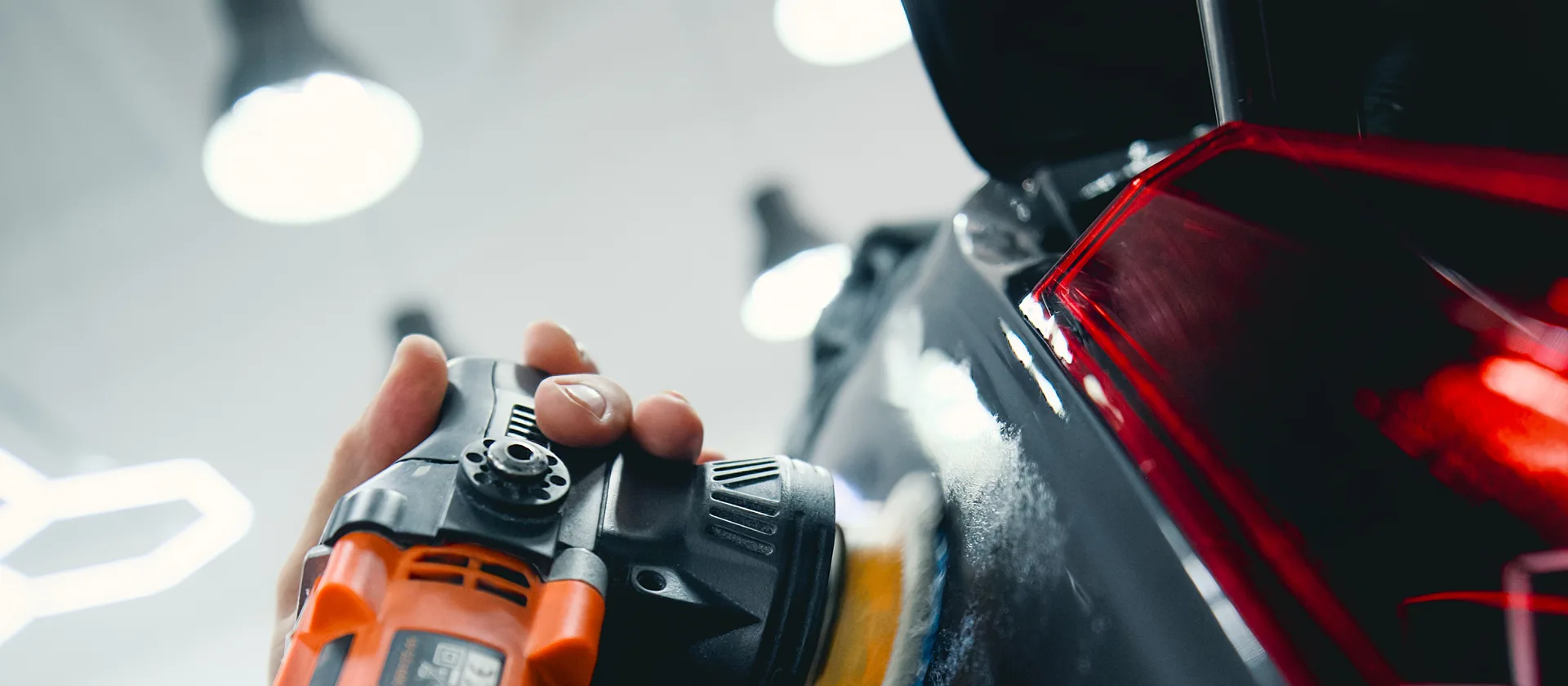
A practical guide to water spots: identify mineral deposits versus etching, choose the least aggressive method and prevent fresh marks.
Quick Summary
Key Takeaways
Reading time
10 min read
Location
Warsaw
- •What are water spots on car paint?
- •Why do water spots form on a car?
- •How can you tell mineral deposits from etching?
- •Will water spots disappear with a normal wash?
What are water spots on car paint?
Water spots are the marks left when droplets evaporate and leave minerals or other dissolved material behind. They may look like pale rings, matte-edged circles, scattered dots or long runs. Their appearance alone does not reveal whether the residue is still sitting on the surface or has already altered the paint finish.
That distinction controls the treatment. A fresh deposit may release during a proper wash or with a dedicated cleaner. If a shadow remains after the residue has gone, the clear finish may be etched, dulled or exposing an older defect. Scrubbing more forcefully is not a diagnosis and can add fine scratches to the original problem.
A water spot is not the same as tar, iron fallout, tree sap or polishing residue. Each contaminant responds to different chemistry. When a washed car has several types of bonded contamination, first read our guide to what paint decontamination is. A controlled sequence and surface compatibility matter more than choosing one powerful product for everything.
Why do water spots form on a car?
The usual cause is water that has been allowed to evaporate on the panel. It may come from a wash, garden sprinkler, rain mixed with airborne dirt, a garage leak or droplets emerging from mirrors and trim after the car appeared dry. Water carrying more dissolved material can leave a more visible residue once its liquid portion is gone.
Heat makes the process harder to control. On a hot panel in direct sun, rinse water or shampoo can dry before it is removed. Dark paint does not necessarily suffer more damage, but it often makes the pale outlines easier to see. Horizontal panels retain droplets, while door marks commonly begin beneath mirrors, handles, badges and window trim.
The issue is not limited to unprotected paint. Water can dry on wax, a ceramic coating, PPF, glass and exterior plastics too. Protection may make routine cleaning easier, but it does not replace drying and cannot guarantee that every kind of water evaporates without residue. The instructions for the specific coating or film always take priority over a general guide.
How can you tell mineral deposits from etching?
A mineral deposit is material on the surface; etching is a change in the surface itself. You cannot always distinguish the two reliably while the car is dirty. Wash and dry a small area, inspect it in diffuse light and under a focused lamp, then make a controlled test with a compatible product.
- Fresh deposits may fade substantially after washing or a short treatment performed exactly as the cleaner label directs.
- Stubborn surface residue remains visible or slightly textured but may still react to chemistry designed for mineral contamination.
- Etching stays visible on a clean surface and may appear under a lamp as a dull ring, shallow crater or shadow within the finish.
- Lookalike defects include dried product, an uneven coating, oxidation, bird-dropping damage or a previous repair.
Do not use a fingernail or abrasive kitchen sponge as a depth gauge. The useful test is controlled cleaning on a small area, not escalating force. Tell the detailer about refinishing, films, coatings and previous home attempts because all of them can change what is safe.
Will water spots disappear with a normal wash?
Fresh and light marks sometimes disappear after a correct wash and prompt drying, but established mineral residue often needs a separate step. Car shampoo is designed mainly to remove loose dirt and road film. It does not dissolve every mineral deposit, while repeated rubbing increases friction without proving that the process addresses the cause.
Work on cool paint. Rinse thoroughly, wash with clean tools, remove all detergent and dry with a soft absorbent towel or safe forced air. Recheck mirrors, emblems and trim after several minutes because trapped water can run out later. If the ring has disappeared, there is no benefit in continuing to a more aggressive stage.
If the spot remains, avoid improvised household mixtures. Kitchen descalers, strong acids and unknown vinegar concentrations can contain additives or react unpredictably with paint, matte finishes, film, seals and coatings. A product whose manufacturer explicitly approves the surface, used exactly as directed and tested first, is the more controlled option.
How do you remove water spots from car paint safely?
Use the least aggressive effective process: wash, inspect, test a compatible deposit remover, reassess, and only then consider correction. Each stage should have one clear purpose and end with inspection. Do not mix cleaners, exceed the dwell time or let chemistry dry on the vehicle.
- Identify the finish. Gloss paint, matte paint, vinyl, PPF and coated paint do not share one universal care procedure.
- Cool and clean the test area. Shade prevents rapid drying; washing removes grit that could scratch during the test.
- Choose an inconspicuous spot. Apply only a product approved for that surface and follow its label precisely.
- Remove it as instructed. Rinse or wipe with a clean towel, then inspect in diffuse and directional light.
- Stop if there is no improvement. More pressure or a second random chemical can turn a deposit into surface damage.
The official Meguiar’s Water Spot Remover page describes a product that removes deposits while lightly polishing glossy finishes, but specifically excludes flat, matte and satin finishes. That is the key lesson: the words “water spot remover” do not make a product suitable for every vehicle. You need to know both the substrate and whether the cleaner works chemically, abrasively or in both ways.
After the deposit is removed, check whether the process weakened an existing wax or maintenance layer. A coated vehicle should follow the instructions for its specific system. Our ceramic-coating aftercare guide explains why hydrophobic behaviour and coating condition should not be judged from one wet panel alone.
When do water spots require paint correction?
Paint correction becomes relevant only when a clean panel still contains a defect that a safe chemical step cannot remove. That can mean the mark is within the finish. Polishing should not be the automatic first move because it levels or removes a small amount of material and must account for paint condition, history and available margin.
A professional test spot can show whether a mild finishing stage is sufficient or whether the etching is too deep to chase safely. The official 3M Rubbing Compound page lists water spots among defects that the compound can address, but it also identifies the product for professional or occupational use. It does not mean every spot requires compound or that every etched mark can be removed without limits.
If an assessment is needed, see our paint correction service in Warsaw. One Way Detailing selects the scope for the individual vehicle; the verified repository facts do not establish one universal correction depth, duration or price. A responsible plan aims for a meaningful improvement with a safe margin, rather than promising total removal before inspection.
Does ceramic coating or PPF prevent water spots?
A coating or film can change how water wets the surface and may make later cleaning easier, but droplets can still dry and leave minerals. Hydrophobicity is not immunity to staining. A car exposed to sprinkler water or left wet in the sun may develop small, fast-drying droplets even when the surface feels very slick.
For PPF, follow the actual film manufacturer’s care guidance. The official 3M automotive film support recommends washing in a shaded or protected area and drying promptly to help avoid hard-water or chlorine marks. That is product-family guidance, not a universal treatment for every film. See our practical guide on how to wash a PPF-protected car for the broader sequence.
Never assume that a polish intended for glossy clear coat is suitable for matte or satin paint and film. Spot-polishing can create a permanently shinier patch that is more conspicuous than the original ring. On these finishes, approved chemistry, an inconspicuous test and installer advice are especially important.
How can you prevent new water spots?
- Wash in the shade on cool panels and divide a large vehicle into manageable sections.
- Do not allow foam, shampoo or rinse water to dry on the finish.
- Dry from the roof down with a clean absorbent towel or appropriate forced air.
- Return to mirrors, handles, badges and trim after a few minutes and catch late drips.
- Avoid regular parking within sprinkler range, especially when the wet car will then sit in sunlight.
- Address fresh marks early, but never dry-wipe a dusty panel.
- Maintain a coating or film according to its own system rather than adding random “boosters”.
If a vehicle has mixed issues — water spots, tar, iron fallout and fine scratches — it needs a sequence, not a collection of progressively stronger products. The car detailing service in Warsaw provides the wider care context. Do not cover the spots with quick wax immediately before an inspection; showing the current condition and explaining the likely water source is more useful.
When should a specialist inspect the car?
An inspection makes sense when spots are old, cover a large area, remain after a safe wash, sit on matte paint or PPF, or affect a coating with an unknown history. Seek help if a home attempt has already created a pale patch, haze or uneven gloss. Continuing with a stronger compound can make the repair more difficult.
At One Way Detailing in Warsaw, the process can begin with inspection and a small test, followed by a cleaning, correction and protection plan appropriate to the surface. We do not state one universal price or duration because those are not verified constants for every car. Contact the studio with photos in daylight and under a focused lamp, and note any film, coating, matte finish or repainted panels.
Article topics