

Does paint need polishing before ceramic coating?
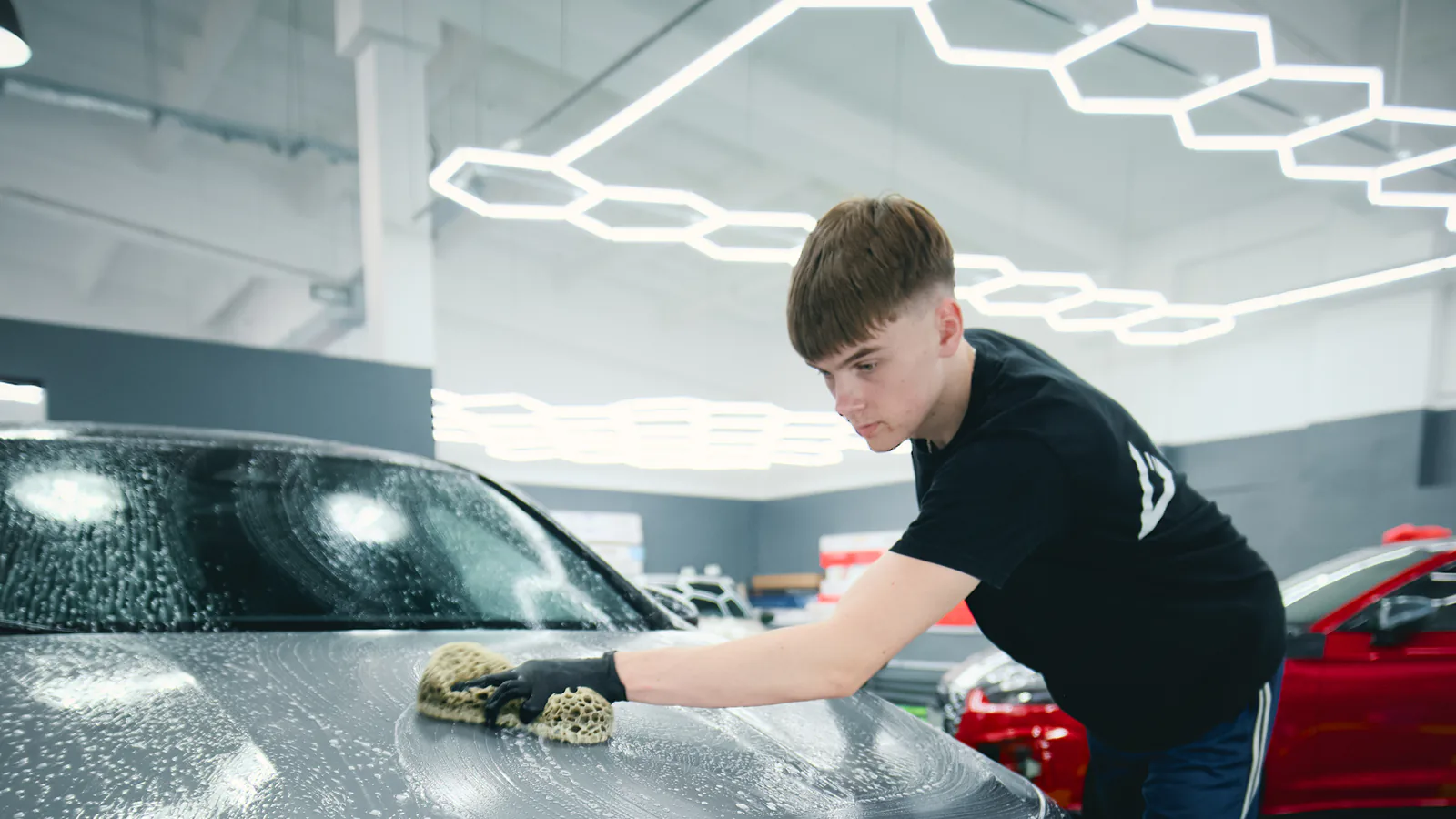
Full correction is not necessary for every car. Learn how preparation differs from polishing, when correction is useful and how to agree the right scope before coating.
Quick Summary
Key Takeaways
Reading time
9 min read
Location
Warsaw
- •What is polishing meant to achieve before ceramic coating?
- •How do washing, decontamination, final preparation and polishing differ?
- •When is polishing before coating worthwhile?
- •When wash marks interfere with the finish you want
Paint does not always need corrective polishing before ceramic coating, but it does need inspection and appropriate preparation. Correction makes sense when you want visible defects reduced and the condition supports that work. Paint that needs no visual improvement may be suitable for coating without correction, provided its condition and the selected system's instructions allow that approach. Vehicle age alone does not decide the answer.
What is polishing meant to achieve before ceramic coating?
Correction and coating address different needs. Polishing works on the appearance of the existing paint; the coating is applied afterwards to the prepared surface. If scratches are visible before application, do not expect protection alone to remove them. First establish which marks can reasonably be improved and whether they actually affect the result you want.
Not every owner wants the most extensive correction. You may want a tidy, consistent finish, or prefer the least intervention justified by the condition. Either can be a sensible choice after assessment. The important point is that any remaining marks are part of an informed agreement, rather than an unexpected discovery at handover.
How do washing, decontamination, final preparation and polishing differ?
These terms are not interchangeable. Washing alone does not describe the full preparation assessment, and thorough decontamination does not mean scratches have been corrected. Ask what “preparation” means in a proposed package. The details should match the surface and the requirements of the coating that will actually be applied.
| Process | Main purpose | What it does not establish |
|---|---|---|
| Washing | Removing ordinary dirt and allowing inspection | That scratches have been repaired |
| Decontamination | Addressing contaminants attached to the surface | That every car needs the same method |
| Polishing | Reducing suitable defects and improving the finish | That missing paint can be restored |
| Final surface preparation | Meeting the selected coating system's application requirements | That one arbitrary product suits every system |
Do not order every possible treatment “just in case”. If additional work is recommended after cleaning, ask what condition makes it necessary. Clay treatment, stronger cleaning or another polishing stage is not evidence of quality simply because it lengthens the list. A useful explanation connects each operation to a real need on your vehicle.
When is polishing before coating worthwhile?
When wash marks interfere with the finish you want
Swirls, haze and uneven gloss can justify a conversation about correction. You do not need to diagnose their precise cause yourself. Identify the areas that bother you and examine them with the detailer after the paint has been cleaned. Agreeing a specific issue is more useful than ordering the “best ceramic” and hoping it will solve everything.
When a test area demonstrates a worthwhile improvement
A test area helps compare the achievable finish with your expectations. It can support gentler correction, a broader sequence or a decision to leave particular marks. It does not guarantee identical results across every panel: different repair and maintenance histories can call for different decisions on the same car.
The RUPES technical reference also connects process selection to paint and defect type. This is a process principle, not a claim about our studio's equipment or a particular combination we use. Choosing a number of stages cannot replace assessing the surface.
When can ceramic coating without correction be considered?
When inspection identifies no visual work that is needed and the owner accepts the existing finish. This can apply to a new car or a carefully maintained used one. Preparation still needs to meet the chosen product's requirements. “No correction” should not be shorthand for “no inspection or cleaning”.
- The cleaned surface has a consistent finish that you are happy to keep.
- There are no visible defects you want addressed before protection.
- The known history does not point to an unresolved surface issue.
- The selected application procedure allows the proposed preparation.
If a studio recommends correction despite an apparently good finish, ask for the specific reason. If it recommends skipping correction despite visible marks, establish that those marks will remain. The package name is less important than a shared understanding of the condition and the outcome.
How should the inspection guide the decision?
| What is observed | What to consider | Question to ask |
|---|---|---|
| A sound finish you accept | Preparation and coating without correction | Does the selected system allow that process? |
| Light marks you want reduced | A gentle correction test | What improvement does the test area show? |
| More obvious or inconsistent defects | An individually assessed scope | Which defects can improve and which will remain? |
| Damage, lifting finish or uncertain history | A separate assessment before choosing a package | Is polishing an appropriate method here? |
This table prepares you for the discussion; it does not diagnose paint remotely. Similar-looking marks can have different depths. A description such as “a black car, a few years old” cannot responsibly determine every operation. Ask for a decision based on findings, rather than an automatic standard for a model year.
Why not remove every scratch before ceramic coating?
Correction has limits. Deep damage or a problem with the existing finish may justify leaving a mark and considering another repair method. Applying ceramic protection afterwards is not a reason to pursue complete defect removal first. Agree whether the goal is a worthwhile overall improvement rather than an unrealistic promise of zero defects.
History matters too. Mention previous repairs and intensive correction before work starts. Shine alone does not establish the condition of the paint system. We do not give a universal thickness threshold or number of machine passes here: isolated figures without knowledge of the panel can mislead an owner into thinking a complex decision is automatic.
Does a new car need the same polishing as a used car?
No. A new vehicle should not automatically receive full correction, and a used vehicle should not automatically be assigned the largest package. Inspect the particular car, its finish and the marks present. The separate guide to ceramic coating on a new car includes a delivery inspection checklist.
Matte paint, wrapped panels and recently repaired surfaces should not be treated automatically like conventional gloss paint. Mention them when booking. For repaired paint, agree requirements with the refinisher and the relevant material instructions rather than borrowing a waiting period recommended for another vehicle or product.
How do you avoid an unnecessary package or a disappointing result?
- Describe your goal: appearance, easier maintenance or both.
- Point out the marks that you actually want improved.
- Ask what cleaning revealed and what the test area demonstrates.
- Agree the remaining defects and the surfaces included.
- Confirm the product, price with clear VAT treatment and handover instructions.
For a comparison of correction scopes, read what one, two and three stages mean. Choosing the largest number is not a sound way to build a quote. Equally, skipping preparation required by the product is not a sensible saving. Reducing unnecessary work means choosing the right objective, while keeping the necessary application conditions.
Where can you compare services and prepare for the visit?
At One Way Detailing you can compare ceramic coating as a separate service with correction and coating together. Bring information about repairs, previous treatments and products used. Avoid concealing marks before inspection; if a masking product has already been applied, simply mention it.
At handover, ask for instructions specific to the coating: initial care, washing and any maintenance requirements. Good preparation begins the process rather than removing the need for ongoing care. Keep the agreed scope so that the work can be assessed against what was actually ordered.
Questions about polishing before ceramic coating
Does every car need polishing before ceramic coating?
Not every car needs visual correction. The paint must be assessed, cleaned and prepared to the selected coating's requirements. Polishing depends on actual defects, the finish you want and the surface assessment, rather than vehicle age alone.
Will ceramic coating hide scratches if correction is skipped?
Do not rely on that. Coating does not remove scratches or replace correction. If visible defects matter to you, agree how they will be addressed before application rather than expecting them to disappear afterwards.
Is decontamination the same as polishing?
No. Decontamination addresses contaminants attached to the surface, while polishing addresses the paint finish. The appropriate cleaning and correction processes are assessed separately according to the surface and the selected system's instructions.
Does a new car automatically need one-stage correction?
No. A new car may need preparation alone or correction of identified marks. Inspect the actual finish first; the registration date should not determine a mandatory number of polishing stages.
Should every scratch be removed before coating?
Not at any cost. Deep damage, thin finishes and previously intensive correction can justify leaving some marks. Agree an outcome that respects the limitations of the particular paint rather than demanding complete removal regardless of condition.
Article topics