

Paint decontamination: what is it and when does a car need it?
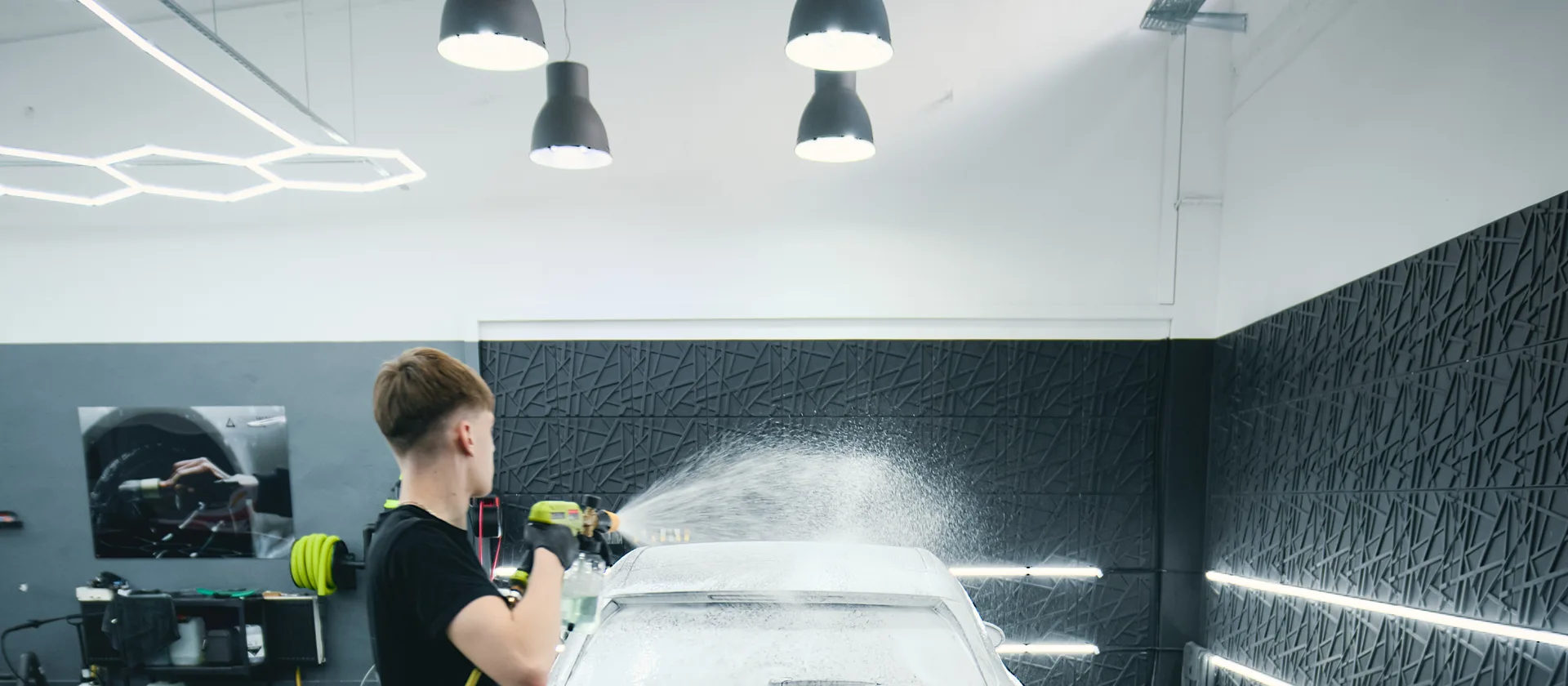
A practical guide to paint decontamination: tar, iron fallout, clay treatment, a safe order of work and preparation for paint protection.
Quick Summary
Key Takeaways
Reading time
11 min read
Location
Warsaw
- •What is paint decontamination?
- •How can you tell that paint is contaminated?
- •Does a normal wash remove tar and iron fallout?
- •What is the safe order for paint decontamination?
What is paint decontamination?
Paint decontamination is the controlled removal of bonded material that an ordinary car wash does not take away. Typical examples include iron fallout, road tar and bitumen, stubborn insect residue, tree sap, industrial dust and other particles attached to the surface. The method should follow the contamination: use the least invasive suitable chemical stage first and move to mechanical treatment only if residue remains.
Decontamination is not another word for polishing. Decontamination removes material sitting on the paint; polishing changes a small amount of the finish to reduce certain defects within it. A clean, smooth surface makes scratches easier to inspect and gives wax, coating or film a properly assessed foundation. It does not mean that every decontaminated car must then be polished.
One Way Detailing's public service catalogue includes bodywork cleaning for bitumen, tar and iron contamination. The scope should still be selected after seeing the car. A light-coloured vehicle with visible fallout, a regularly protected car and older paint with an unknown history may need very different treatment. See the broader car detailing service in Warsaw for context.
How can you tell that paint is contaminated?
Roughness that remains after a thorough wash is the simplest clue, but a sound diagnosis combines touch, visual inspection and the location of the deposit. Do not run your hand over a dirty car, because hard particles may be dragged across the finish. Wash and dry the vehicle first, then inspect the lower doors, sills, rear panels, areas around the wheels and horizontal surfaces in good light.
- Black or brown dots on lower panels may be road tar or bitumen.
- Small orange dots, particularly obvious on pale paint, are often oxidising metallic particles.
- Texture without a clear stain may come from industrial fallout, paint overspray or mixed road contamination.
- Sticky, irregular marks may be tree sap or adhesive residue and need separate assessment.
Colour alone cannot confirm the cause. An orange point may be iron fallout on the surface, but it may also reveal coating damage and corrosion beginning below. If the mark returns, bubbles, surrounds a chip or exposes missing paint, do not automatically treat it as dirt. It needs a repair assessment rather than progressively stronger cleaner.
Does a normal wash remove tar and iron fallout?
Regular shampoo removes loose grime and traffic film but often leaves particles that have bonded to the finish. Scrubbing harder is not the answer: it can move the contamination across the panel and add micro-scratches. The correct chemical is intended to loosen a particular deposit so that it can be rinsed away or lifted with minimal contact.
The official Autoglym Fallout Remover instructions describe a product for metallic and industrial fallout and require a thorough rinse after the specified dwell time. That illustrates the principle; it is not a recommendation that one product suits every vehicle. The label of the actual product, surface and protection compatibility, panel temperature and contact time all matter.
Tar remover and iron-fallout remover do different jobs. A generic “strong chemical” does not replace identifying the deposit. Never mix products, work on hot bodywork or let the solution dry. On matte paint, PPF, a colour wrap, a newly refinished panel or an unknown coating, check the material maker's instructions and test an inconspicuous area first.
What is the safe order for paint decontamination?
A safe sequence moves from the least invasive stage to greater contact and stops as soon as the surface is clean. There is no reason to clay the entire car merely because a generic online checklist includes it. Avoiding unnecessary friction reduces the chance of adding new marks.
- Inspect the cool vehicle. Identify the surface, existing protection, refinished areas and visible contamination.
- Pre-wash. Remove loose material without rubbing it into the finish.
- Contact wash and rinse thoroughly. Only a clean surface shows which deposits are truly bonded.
- Match the chemical stage to the problem. Treat tar and metallic fallout separately while following each label.
- Rinse again and inspect. Do not continue until product residue has been removed.
- Use mechanical decontamination only where required. Work in small sections with sufficient lubricant and minimal pressure.
- Finish as required by the next step. Wash or wipe down appropriately, dry the car and inspect under suitable lighting.
This order also improves diagnosis. Once the deposits are gone, scratches, oxidation and previous repairs become easier to see. Only then should you decide whether protection alone is sensible or whether the vehicle needs paint correction in Warsaw. Layering another product over an unexamined finish hides information rather than creating a plan.
What do chemicals remove, and what does detailing clay remove?
The chemical stage should do as much work as practical without mechanical rubbing. An iron-reactive product loosens metallic fallout, while a tar remover is formulated for oily road spots and certain adhesive residues. In either case, suitability for the surface and complete removal matter more than a dramatic colour reaction.
Detailing clay or a synthetic decontamination pad collects material that still protrudes above the surface, such as some paint overspray, stubborn environmental deposits or remnants that the chemical stage did not remove. The official Meguiar's clay kit page lists overspray, fallout, road tar and other bonded contaminants and pairs the clay with a dedicated lubricant. This is product-specific guidance; it does not establish that any clay is compatible with every matte finish, film or coating.
Lubrication is not a cosmetic extra. It limits friction and lets the material move across the panel without excessive pressure. Fold or reshape the clay to expose a clean face as it loads up. If it falls on the floor, discard it: trapped grit can turn the tool into an abrasive.
Can clay treatment scratch car paint?
It can leave micro-marring or a light haze even though its purpose is contamination removal rather than paint abrasion. Risk increases on soft paint, with aggressive clay, inadequate lubrication, heavy pressure, repeated passes or when chemical decontamination was skipped. A promise that all claying is completely mark-free is therefore too broad.
Decide what follows before beginning. If the car is already scheduled for polishing, any light marring from a properly controlled decontamination stage can be evaluated in the correction plan. If the goal is protection without polishing, select the mildest effective approach, perform a test spot and stop if removing the last trace of contamination is not worth the visual risk.
Do not press harder in an attempt to “remove a scratch”. Clay does not repair defects within the paint. If a line remains once the surface is clean, continued rubbing can make the finish worse. Our guide to what paint correction does explains the distinction between cleaning and correction.
When should paint be decontaminated?
Decontaminate when post-wash inspection shows bonded deposits or when the next service requires a genuinely clean surface. A fixed rule such as “every three months” cannot suit every car. A vehicle parked near railways or industrial activity and one exposed to frequent urban braking may collect different deposits from a garaged car with consistent maintenance.
Decontamination is particularly logical:
- when washed paint remains distinctly rough;
- when lower panels show tar or pale paint shows orange fallout dots;
- before polishing, so a pad does not collect and drag bonded debris;
- before wax, coating or PPF when the selected system requires that preparation;
- before a close condition assessment, for example after winter or before selling the car.
If you are planning a coating, also read whether paint needs polishing before ceramic coating. Decontamination is one preparation stage, but it does not decide the appropriate correction level by itself.
Does decontamination remove scratches or restore gloss?
It does not remove scratches, although taking away surface deposits can reveal a cleaner, smoother finish that reflects light better. If bonded contamination was the main source of dullness, the difference may be noticeable. If the problem is wash marring, oxidation, etching or circular micro-scratches, the paint needs a separate assessment.
This distinction matters when comparing service scopes. Smooth paint is not automatically scratch-free, and a glossy panel can still show many defects under inspection lighting. A transparent plan separates cleaning, optional correction and protection instead of selling them as one undefined step.
Which mistakes most often compromise the result?
- Working on a dirty or hot panel makes product behaviour uneven and encourages drying.
- Mixing chemicals makes the reaction and safety unpredictable.
- Skipping a test spot is especially risky on film, matte finishes, repairs and unknown protection.
- Picking tar with a fingernail or rough sponge may remove the dot and leave a scratch.
- Using clay without sufficient lubricant increases friction and the chance of haze.
- Failing to rinse thoroughly leaves residue in gaps and around badges.
- Automatically polishing the whole car ignores the fact that correction scope should follow inspection.
Wear the protection specified on the label, work in a ventilated area and follow the actual product instructions. Never copy dilution or dwell time from a different cleaner. If the vehicle, film or coating maker imposes specific limits, those take priority over a general guide.
How should you prepare a car for professional decontamination?
Do not apply quick wax, dressing or a filling product immediately before the appointment. Tell the studio about recent paint repairs, film, coatings, touch-up work and any area that previously reacted to a chemical. Point out the marks you noticed, but do not scrape them first.
Emptying the whole cabin is unnecessary for bodywork-only treatment. The history of the finish is more useful. Our checklist on preparing a car for a detailing appointment explains what to bring, remove and communicate.
How do you check the result after decontamination?
Inspect the car in diffuse light and under a focused light source. Typical contamination dots should be gone, and dried chemical residue should not remain in panel gaps, around emblems or next to seals. A gentle touch check can confirm improved smoothness, but repeatedly rubbing dry paint merely to test it adds needless contact.
Agree on the next step as well. Cleaned paint may need fresh protection if the process removed or weakened an old wax. For coatings and films, maintenance depends on the particular system; our ceramic-coating aftercare guide explains why product-specific instructions matter.
Should you decontaminate paint at home or use a studio?
DIY work can be reasonable for light, clearly identified contamination when you know the surface and can follow the product instructions precisely. A studio is the safer choice for soft paint, matte finishes, PPF, unknown coatings, recent repairs or stubborn mixed deposits. Professional assessment is also useful before correction and new protection because decisions across those stages are connected.
At One Way Detailing in Warsaw, you can show the problem and agree on a suitable scope without assuming a full package in advance. The public offer confirms bodywork cleaning for bitumen, tar and iron; the exact approach should follow the condition of the individual vehicle. Contact the studio, send clear photos of the visible spots and mention any previous protection or refinishing.
Article topics