

What is a matte PPF conversion, and can it be reversed?
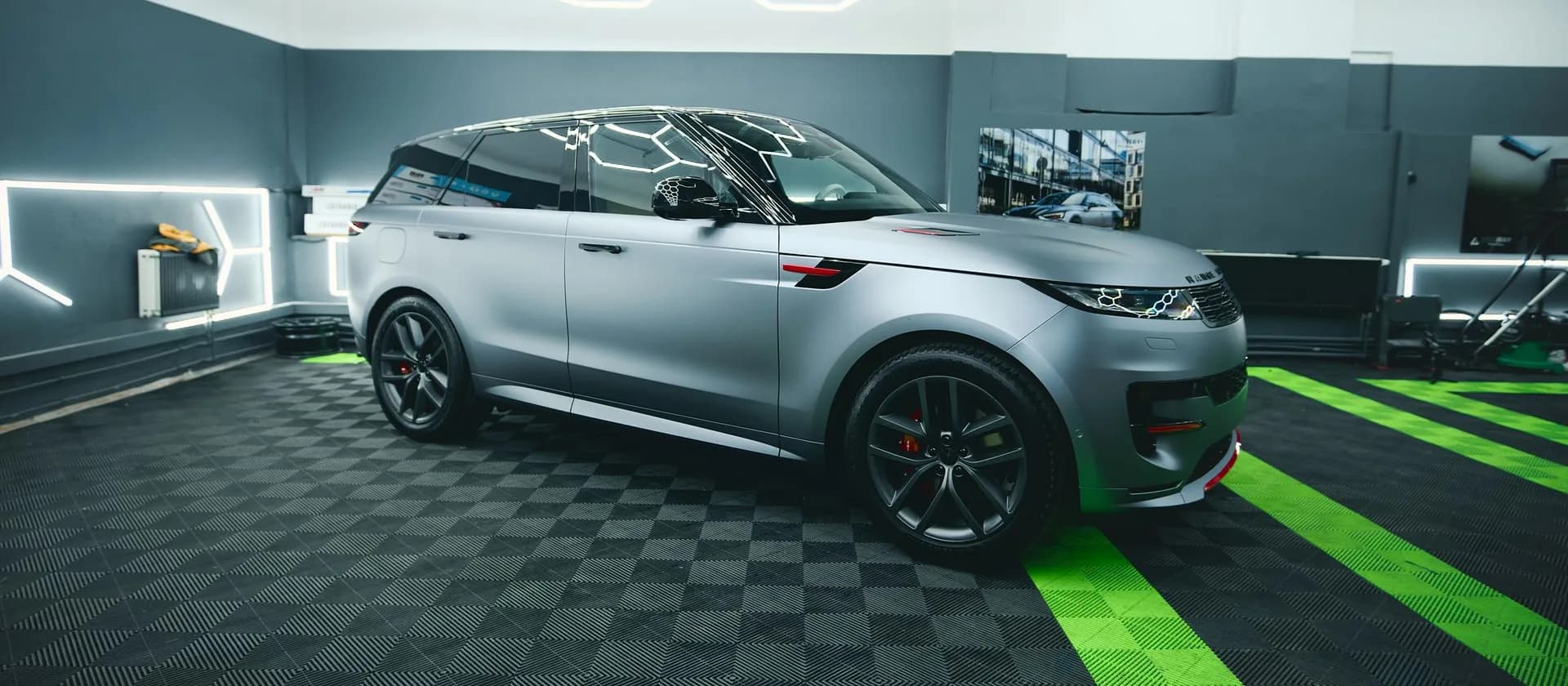
Understand Poland’s mrożenie lakieru: clear matte and satin PPF, colour changes, paint preparation, coverage and the conditions for film removal.
Quick Summary
Key Takeaways
Reading time
11 min read
Location
Warsaw
- •What is “mrożenie lakieru” with paint protection film?
- •Does a satin PPF conversion change the car’s colour?
- •How does clear satin PPF differ from coloured PPF, vinyl and matte paint?
- •Can you get a frozen finish without sanding or repainting?
What is “mrożenie lakieru” with paint protection film?
“Mrożenie lakieru” is the Polish term for changing glossy paint to a matte or satin appearance using transparent paint protection film, or PPF. The paint is not frozen or chemically dulled. The installed film changes the surface reflection while allowing the underlying colour to remain visible. It also adds a protective layer over the paint.
You may also see “zmrożenie lakieru”, “satynowanie” or “frozen finish” in Polish workshop descriptions. These expressions describe an intended look, rather than one universally specified product. Before booking, establish whether you want to keep your current colour, choose a different colour, or protect paint that already has a factory matte finish. Similar photographs can show very different jobs.
This guide covers converting glossy bodywork with clear PPF. For help selecting the exact level of reflection, read our matte versus satin PPF sample comparison guide. The distinction matters because a film called matte may produce what you personally consider a satin finish.
Contents
- What is “mrożenie lakieru” with paint protection film?
- Does a satin PPF conversion change the car’s colour?
- How does clear satin PPF differ from coloured PPF, vinyl and matte paint?
- Can you get a frozen finish without sanding or repainting?
- Does the paint need polishing before a matte PPF conversion?
- Will a front-only package give the whole car a frozen look?
- Why do edges and small details matter so much?
- Does matte PPF prevent every kind of damage?
- Is a matte PPF conversion reversible?
- What changes in daily ownership after the conversion?
- What should you agree before booking a satin conversion in Warsaw?
Does a satin PPF conversion change the car’s colour?
Clear satin or matte PPF changes the finish without adding a new opaque colour. Red paint remains the red base beneath the film; silver remains silver. However, that does not mean the car will look exactly the same apart from fewer reflections. The apparent depth, brightness and metallic character can change.
Ask to see a suitable sample before accepting a promise to retain “exactly the same colour, only matte”. One owner may love the softer appearance; another may miss the particular sparkle that made them choose the paint. Look in daylight and under workshop lighting, both close up and from a few steps away.
SunTek describes changing glossy paint to a satin appearance without repainting on its PPF Clear and Matte product page. This demonstrates the principle for that product line. It does not mean every film sold as matte produces an identical result on every colour.
How does clear satin PPF differ from coloured PPF, vinyl and matte paint?
Separate the material from its appearance. Satin describes a finish. PPF describes a category of protective film. A photograph of a satin vehicle cannot tell you whether the material is clear PPF, coloured PPF, vinyl or paint. That information should come from the project description or installer.
| Option | What changes? | What needs checking? |
|---|---|---|
| Clear matte or satin PPF | The appearance of the existing colour through a different finish | Film model, reflection level and paint condition |
| Coloured PPF | The visible body colour and finish | Colour sample and treatment of recesses and details |
| Styling vinyl | Appearance according to the chosen material | Its specification; do not assume PPF properties |
| Matte repaint | The paint system itself | Paintwork scope and future repair arrangements |
If your car is white and you want green, transparent satin film cannot make that transformation. A coloured material is a different choice. Our guide to changing car colour with PPF explains that distinction. It is also essential when comparing quotes: two similar-looking cars may represent completely different services.
Can you get a frozen finish without sanding or repainting?
Yes. A suitable film creates the finish without sanding the paint to make it matte. The prepared paint remains beneath the PPF. Cleaning a surface for installation must not be confused with deliberately abrading the paint system to change its appearance.
The vehicle still needs inspection. Existing protection products, chips, touch-ups and repainted panels affect the starting condition. Photographs are useful for an initial conversation, but they cannot reveal every issue. Ask for existing defects to be recorded and for a clear explanation of which will remain under the film.
If a proposal mentions “matting the paint before matte film”, ask exactly what is intended. Cleaning, correcting defects in glossy paint and sanding paint to create a matte finish are different operations. The agreed preparation should follow the condition of the vehicle and the product requirements, rather than the nickname given to the finished look.
Does the paint need polishing before a matte PPF conversion?
Not every car needs a full paint correction before matte PPF. The starting point is an inspection. Selected defects in glossy paint may merit correction, but film is not a repair for chips, peeling paint or poorly executed touch-ups. Agree on the expected result before deciding how much preparation is sensible.
Surface cleanliness and cosmetic correction are separate questions. Contamination and previously applied protection need consideration for installation. Polishing addresses a different issue: paint defects and appearance. Buying the most extensive correction package without examining the car does not automatically produce a better outcome.
Factory matte paint requires a separate approach. Do not carry across procedures intended to restore gloss. Our article on paint decontamination before protection explains the cleaning terminology. Ask the installer what preparation your specific surface needs, why it is needed and how any remaining imperfections will be documented.
Will a front-only package give the whole car a frozen look?
No. On an originally glossy car, matte film on the front creates a finish difference from uncovered bodywork. That may be an intentional styling decision, but it is not a uniform whole-car conversion. Coverage should follow the visual objective as well as the areas most exposed to road debris.
For a complete transformation, discuss how painted panels will work alongside black trim, carbon components and other details. Every surface does not have to look equally matte. Contrasting finishes can form a coherent design when their boundaries are deliberate and agreed before installation.
At One Way Detailing, Full Body covers the complete body, including the roof. That is the relevant starting point for a consistent conversion. The exact matte or satin material and its price still require a specific quote; the package name does not identify the film model.
Why do edges and small details matter so much?
A change in reflection draws attention to transitions between glossy paint and matte film. Look around handles, bumper corners, door edges and badges. Consistent finishing matters more than an attractive photograph of the middle of the bonnet. Ask how difficult areas on your model will be treated.
One Way Detailing’s confirmed standard for clear body PPF is to wrap film around panel edges to conceal its ends. This does not automatically mean covering the inner door areas or every recess. Wrapping an edge and extending the job onto internal surfaces are different tasks.
Instead of asking only whether the result will be “seamless”, point to a specific area and ask where the material ends. Discuss the appearance with doors open as well as closed. Concrete decisions are easier to verify at collection than broad promises about invisible installation or a showroom finish.
Does matte PPF prevent every kind of damage?
No. PPF adds a layer that can take some everyday wear, but it does not make the vehicle immune to every stone, deep cut or dent. A mark in the film does not automatically mean the paint underneath is damaged. Equally, a clean appearance from a distance cannot establish that the surface is unaffected.
Where a product has self-healing properties, they apply to a limited category of surface marks. XPEL distinguishes minor scratches from deeper damage in its PPF FAQ. Do not interpret this feature as repairing cut film or damaged paint.
If something happens, photograph the area and arrange an assessment before trying another treatment. Polishing or improvised heating can make the original problem harder to evaluate. With matte and satin surfaces, preserving an even finish matters; removing a mark at any cost is the wrong objective.
Is a matte PPF conversion reversible?
The film can be removed, but returning safely to exposed paint also depends on the paint’s condition. Sound factory paint presents a different situation from repaired panels, touch-ups or poorly bonded coatings. An unconditional promise of risk-free removal on every vehicle is not a useful basis for a decision.
Disclose known repairs and previous wrapping before installation. If a used car’s history is incomplete, say so. Later removal should be planned work, rather than pulling film off a cold panel just before selling the vehicle. XPEL recommends professional removal in its film care and removal guidance.
Do not assume that every part of the paint will look newly manufactured after several years. Its original condition, use and later repairs remain part of the car’s history. Photographs and notes taken before application provide a much better reference when assessing the surface after removal.
What changes in daily ownership after the conversion?
Get instructions for the actual installed product: when the first wash is allowed, which cleaners are suitable and which additional treatments are approved. Do not automatically copy advice from another brand or from the glossy version of a product. Keep the film identification with your care information.
A simple approved cleaning routine is more useful than a collection of unrelated products. Tell anyone washing the car that it has a matte or satin finish. Avoid ordering a general gloss-enhancement treatment without checking compatibility. Our matte-surface care guide covers the routine in detail.
Also consider the practical arrangements: where will you wash it in winter, and who will assess stubborn contamination? If the only available plan is a communal brush and an unspecified wax programme, improve that plan before choosing the finish. The best-looking sample still needs to fit the way you actually use the car.
What should you agree before booking a satin conversion in Warsaw?
Bring the vehicle model, daylight photographs, repair information and a specific description of the look you want. A few reference photographs help when you explain the relevant feature: soft reflections, stronger matte character or contrast with glossy details. “Premium” by itself is not a result that either side can check.
Imagine the car on an overcast morning, in bright afternoon light and after a long journey. Would you still choose the same finish? Consider the relationship with the glass, wheels and trim, not just a close-up of one panel. If you are uncertain, inspect samples first rather than treating a booking as a commitment to an undefined look.
- Identify clear or coloured PPF and its exact product line.
- Approve a finish sample, rather than only another vehicle’s photograph.
- Agree preparation, edge treatment and any planned disassembly.
- Obtain the final quote, warranty terms and care instructions.
- Inspect the completed car from several angles and in different light.
One Way Detailing is at Odlewnicza 4 in Warsaw. For a consultation and quote, describe the objective as retaining the base colour while changing the finish. If budgeting comes first, see our guide to matte and satin PPF costs and quote comparisons.
Clear PPF with an invisible edge finish
At One Way Detailing, we always wrap clear body PPF around panel edges so the film ends are hidden. We do not use undersized precut patterns that leave a 0.5–1 cm gap from the panel edge.
Article topics