

Matte or satin PPF: what is the difference and which should you choose?
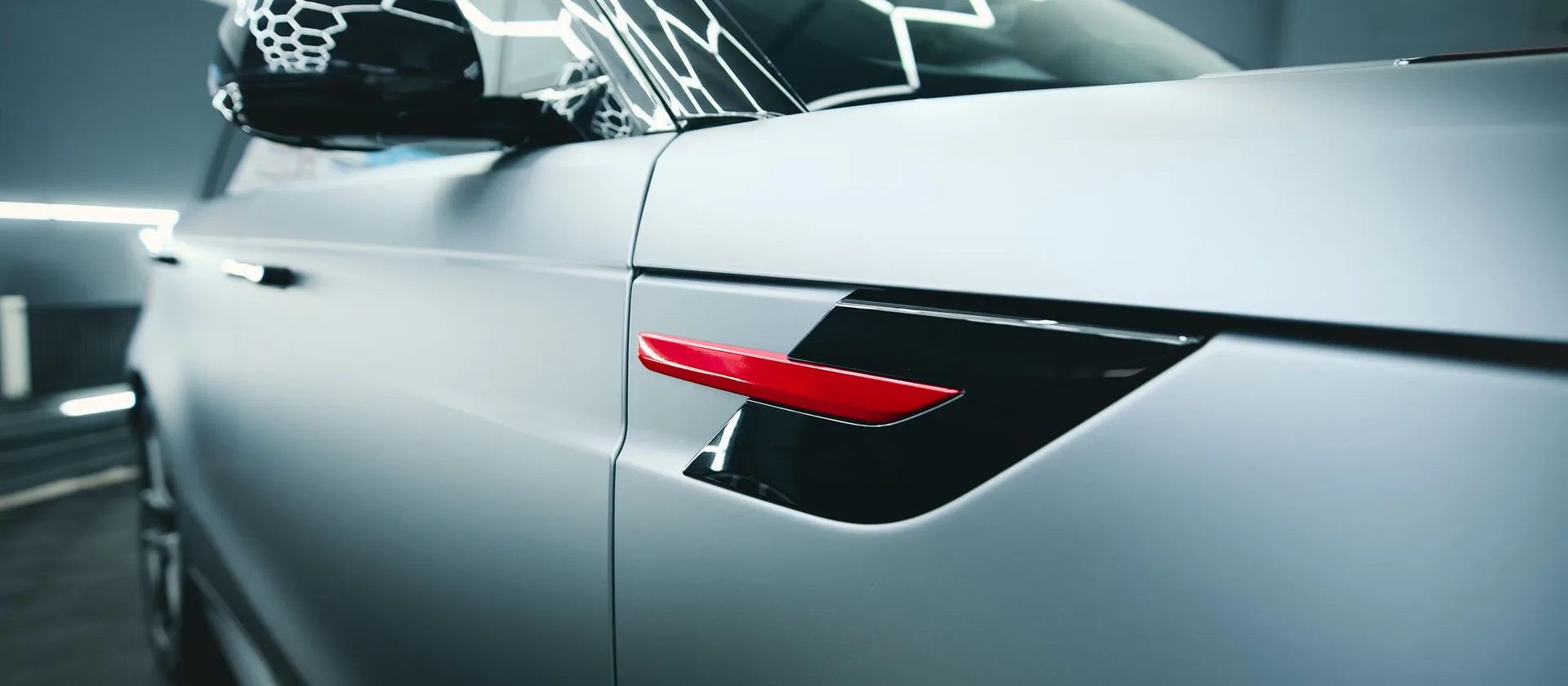
Compare matte and satin PPF using real samples, paint colour and lighting. Learn what product names mean and how to match factory matte paint.
Quick Summary
Key Takeaways
Reading time
11 min read
Location
Warsaw
- •Matte or satin PPF: what is the difference?
- •Do matte, satin and STEALTH mean the same thing?
- •How should you compare matte and satin PPF samples?
- •First, check the surface beneath the sample
Matte or satin PPF: what is the difference?
Matte PPF suppresses distinct reflections more strongly, while satin PPF retains a soft sheen. That is a useful description of appearance, but not a complete product specification. Commercial names overlap: a film labelled matte may create a finish you would describe as satin. Choose a particular material after seeing a suitable sample.
Once you know that you want less gloss, asking which finish looks more expensive is not especially helpful. Ask whether you want broad, soft reflections to remain, how you want the body lines to appear and whether the film must match existing factory matte paint. Those questions lead to a decision you can actually assess.
If the process itself is unfamiliar, start with what a satin PPF conversion means, including the Polish term “mrożenie lakieru”. This article focuses on comparing samples, interpreting product names and agreeing the appearance before the whole car is wrapped.
Contents
- Matte or satin PPF: what is the difference?
- Do matte, satin and STEALTH mean the same thing?
- How should you compare matte and satin PPF samples?
- How do the finishes look on black, white and metallic paint?
- Is clear satin PPF the same as coloured satin film?
- Which offers better protection: matte or satin PPF?
- What should you choose for factory matte paint?
- Is satin PPF easier to maintain than matte PPF?
- Will a ceramic coating turn matte or satin PPF glossy?
- How can you check finish consistency when collecting the car?
- How do you make the final choice between matte and satin?
Do matte, satin and STEALTH mean the same thing?
They should not be treated as one precise scale. Matte and satin describe surface appearance; STEALTH is an XPEL product name. Two films placed in a similar category may still differ in reflection, texture and their effect on a particular paint colour. The full product identity matters more than the category alone.
For example, 3M’s automotive film guidance describes its matte PPF as producing a satin finish. A matte label therefore does not promise the complete absence of reflections. That distinction is especially relevant if you have a very specific visual result in mind.
Ask for the manufacturer, product line and finish variant during the consultation. “Premium satin” is too vague to compare with the result later. Keep the sample identification in the quote or photograph its label. If an alternative material is proposed before installation, compare it again rather than assuming a shared name guarantees the same appearance.
How should you compare matte and satin PPF samples?
Compare samples side by side, over the same colour and under the same light. Photographs from different workshops do not provide a controlled comparison. Contrast, exposure and editing can all change what you see. One photograph may also show coloured PPF, while the other shows a transparent film over factory paint.
First, check the surface beneath the sample
Clear film over a white display card cannot reveal everything you will see on dark metallic blue paint. Ask for an applied sample or demonstration on a comparable colour. A loose piece with its transport layers still attached may also misrepresent the result. The installer should explain how the sample is intended to be viewed.
Next, change the light and viewing distance
Look in daylight, shade and workshop lighting. Compare the shape of reflections close up, then step back to assess the overall appearance. Check whether you like the finish across the surface, rather than at one angle that happens to photograph well. A phone picture can record your choice but should not replace this inspection.
Finally, describe what you prefer
Point to the chosen sample and explain why: “I want softer reflections, but I still want light to describe the shape of the doors.” That is clearer than “very matte”. If you cannot distinguish two samples, do not force a decision based on their labels. Compare their documentation, care requirements and the complete installation proposal instead.
How do the finishes look on black, white and metallic paint?
There is no single best paint colour for matte PPF. Instead of ranking colours, use your own paint as the reference. On dark bodywork, examine the apparent blackness and broad reflections. On lighter paint, inspect texture and how the finish changes across a curve. With metallic or pearlescent paint, consider how much of that character you want to retain.
| Paint type | What to inspect | Promise to question |
|---|---|---|
| Black and dark blue | Depth in shade and reflection across curved panels | “Matte always makes black look deeper” |
| White and light grey | Texture and consistency between neighbouring surfaces | “You cannot see the difference on light colours” |
| Metallic and pearl | Flake appearance close up and at normal viewing distance | “The film always enhances the pearl effect” |
| Strong solid colours | Apparent saturation and definition of body lines | “The colour will look completely unchanged” |
These are inspection prompts, not predictions for every film. Do not choose solely because a similar vehicle looks impressive online. A different paint code, different lighting or image editing may account for more of the difference than a caption saying “the same colour” suggests.
Is clear satin PPF the same as coloured satin film?
No. Transparent satin PPF lets the underlying paint colour show through. Coloured film supplies its own visible colour. A satin material may also be protective PPF or styling vinyl. Confirm all three parts of the choice: material category, clear or coloured construction and finish.
The Lamborghini Urus colour-change project in One Way Detailing’s portfolio is an example of coloured PPF styling. It can provide visual inspiration, but it is not a sample of how clear satin film will look over your paint. Apply that distinction when viewing any portfolio.
If a new colour is the objective, explore whole-car colour changes with PPF. If you want to retain the existing base colour, compare transparent variants. This avoids the disappointment of discovering that a photographed shade cannot be recreated simply by reducing the gloss of your current paint.
Which offers better protection: matte or satin PPF?
The finish name alone cannot establish protective performance. Compare the documentation for the actual products: construction, intended application, surface properties and the conditions attached to use and warranty. A thickness figure also needs context, including what the measurement includes, before it becomes a useful comparison.
The 3M Pro Series 200 Matte product page describes heat-assisted self-healing of minor marks. Read this as a property of that product, not a promise that every matte film repairs every kind of damage.
Ask the studio to compare two fully identified products. If they come from different ranges, do not attribute every difference to matte versus satin. Availability, installation choices and later support can also affect the decision, but none follows automatically from the degree of reflection. A clear explanation is more useful than choosing the thickest sounding option.
What should you choose for factory matte paint?
The priority is matching the film’s appearance to your intended result on the original surface. Matte over matte does not automatically mean no visible difference. If only part of the car will be protected, comparing the covered and uncovered surfaces is particularly important.
Decide whether you want to preserve the factory appearance as closely as possible or intentionally change it. These are different acceptance criteria. For preservation, inspect the sample beside the original paint. For transformation, assess the planned overall appearance. A factory colour name containing “frozen” does not identify a matching film.
Keep the care requirements of the paint and the film separate too. Adding protection does not justify first polishing factory matte paint as though it were a gloss finish. Our guide to matte paint and film surfaces explains the distinction and helps you prepare useful questions for the installer.
Is satin PPF easier to maintain than matte PPF?
There is no reliable rule that every satin film is easier to maintain than every matte film. The product, contamination and owner’s routine all matter. A mark being less obvious does not prove that the surface is more resistant or that contamination can safely be ignored.
Consider where the car is parked, whether it sits beneath trees, how it is used and where it can be washed and dried. This is not about creating an elaborate ritual. A simple routine that follows the actual product instructions is more practical than a large collection of unrelated “all-purpose” treatments.
Ask for approved products and first-wash instructions before booking. Our article on washing a car with PPF provides the broader routine. For the finish decision, focus on whether the recommended care fits your circumstances rather than accepting “easy maintenance” as a complete explanation.
Will a ceramic coating turn matte or satin PPF glossy?
Do not decide compatibility from the word ceramic alone. You need confirmation for the combination of the exact film, exact coating and intended appearance. A treatment approved for one system may not suit another, and consistent application also matters to the final look.
If a coating is included in the proposal, ask what it does and whether its appearance can be demonstrated on a sample. It should not be used to rescue a film finish you did not like in the first place. Accept the film itself first, then consider an appropriate additional surface treatment.
Do not assume every PPF requires that extra purchase. Any requirement should be traceable to the product documentation, with the price and scope clearly stated. This separates necessary care from an optional addition and lets you compare quotes without confusing different packages.
How can you check finish consistency when collecting the car?
Compare adjacent panels, remembering that a flat door and a curved wing reflect the same light differently. Move around the car and see whether the apparent difference follows the viewing angle. A fixed local mark needs explanation; one reflection on a curve is not, by itself, evidence of a defect.
Inspect edges, handle areas and transitions to other materials. Ask the installer to review any concern with you. If an appearance is attributed to the period immediately after application, agree when it will be checked again and how to make contact. “Everything will disappear” is less useful than a specific follow-up plan.
Keep the film identity for future repairs. Replacing material on a damaged panel begins with identifying the product, rather than guessing from a car photograph. A difference between a newly covered panel and neighbouring film that has been in service must be assessed in person; a matching name alone cannot rule it out.
How do you make the final choice between matte and satin?
Choose a sample you like in shade and stronger light. If you want more subdued reflections, start by comparing the more matte options. If you prefer a soft sheen that describes the body’s curves, start with satin. These are starting points for inspection, rather than replacements for it.
If two people regularly use the car, inspect the samples together. “Too reflective” and “too flat” express expectations that a technical label cannot resolve. Record the agreed material, especially when the booking is several weeks away. Any proposed substitution should reopen the sample comparison.
- You know whether you need transparent or coloured film.
- You have the complete product identification.
- You accept the appearance over a comparable colour in several lighting conditions.
- You understand care requirements and the treatment of details.
- You are comparing final quotes for the same scope.
The last point is covered in our guide to matte and satin PPF pricing. To discuss your car with One Way Detailing at Odlewnicza 4 in Warsaw, send the model and a description of the finish you want. The useful outcome is an identified material and a clear plan.
Clear PPF with an invisible edge finish
At One Way Detailing, we always wrap clear body PPF around panel edges so the film ends are hidden. We do not use undersized precut patterns that leave a 0.5–1 cm gap from the panel edge.
Article topics