

PPF on a used car: when is it worth considering?
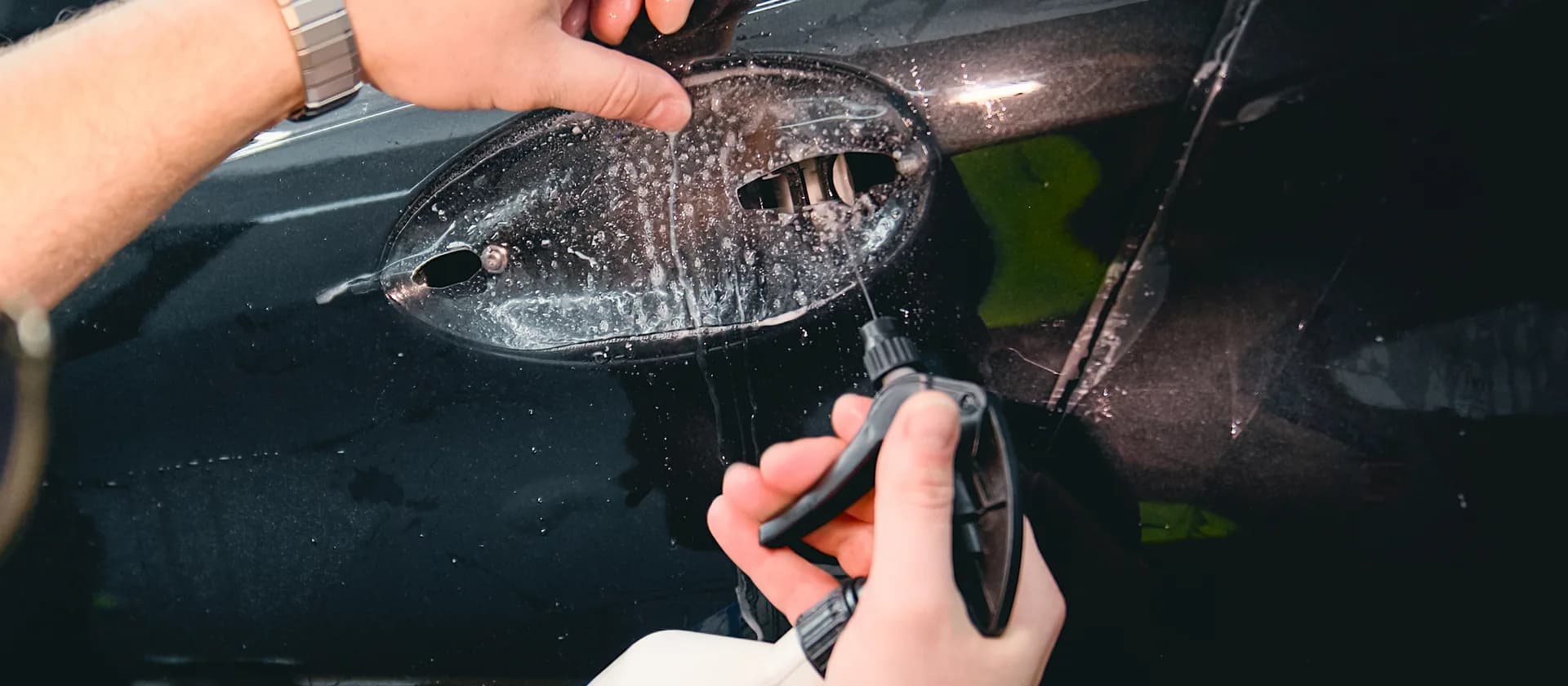
Assess used paint before PPF: a panel-by-panel decision table, existing chips, repair history, preparation and the choice between Full Front and Full Body.
Quick Summary
Key Takeaways
Reading time
10 min read
Location
Warsaw
- •Is it too late to fit PPF after several years of use?
- •How should used paint be checked before installing PPF?
- •Can PPF conceal old scratches and stone chips?
- •Which existing marks can be accepted under film?
PPF on a used car can make sense when the surface is suitable for film and you want to protect it against further damage. Vehicle age does not provide a universal cutoff. The condition of individual panels, repair history and how long you plan to keep the car matter more. Peeling paint, corrosion or uncertainty about a repaired finish should be addressed before deciding to cover it.
This guide focuses on clear paint protection film applied to painted bodywork. It provides an inspection worksheet, a way to choose a sensible scope and questions for comparing a quote. It is not a DIY repair guide or a promise that film will turn worn paint into new paint. Establish what you are protecting and which appearance you knowingly accept.
Is it too late to fit PPF after several years of use?
Protection can still be considered after several seasons. Not fitting it on delivery day does not automatically mean the opportunity has passed. Ask whether the present finish is worth preserving and whether the proposed coverage matches future use. Well-kept bodywork and a heavily damaged front end call for different decisions even on cars of the same age.
Write down the objective before booking. Are you concerned about further road chips, preserving the current appearance or fixing marks already present? The last objective concerns preparation or repair rather than the protective material itself. Separating those jobs prevents film being ordered with expectations it cannot meet.
How should used paint be checked before installing PPF?
Look at individual panels rather than the car’s overall shine. The bonnet can differ from the doors, and a repaired wing may have a different history from the roof. The table below is an inspection discussion aid. It does not establish substrate suitability remotely, but helps collect useful information before the conversation becomes only about price.
| What do you notice? | What needs establishing? | Useful next step |
|---|---|---|
| A consistent finish without visible damage | Maintenance history and existing protection | Assess preparation and choose coverage |
| Fine scratches, haze or uneven gloss | What can improve and which finish you accept | Clean, inspect and consider a correction test |
| Chips or deep scratches | Whether the marks may remain or need repair | Agree the condition before film is fitted |
| A repainted panel | Repair scope, timing and paint system | Separate assessment with the refinisher’s guidance |
| Peeling, blistering or corrosion | The cause and substrate condition | Assess repair first, then reconsider protection |
For each uncertainty, note the panel and take an overall photograph plus a close view. You do not need to determine individual layer thicknesses or attack contamination with strong chemicals yourself. Accurately describe what you know and identify any panel whose history is unknown.
Can PPF conceal old scratches and stone chips?
Some fine marks may look different under film, but that is not a repair. Missing paint in a chip is not restored and a deep scratch does not disappear simply because material covers it. Avoid buying installation on a promise that every imperfection will become invisible. Discuss the expected appearance before fitting begins.
Which existing marks can be accepted under film?
Not every small cosmetic mark must be repaired in pursuit of an ideal finish. An owner may accept a particular appearance if the surface has been properly assessed for installation. Identify those areas in the agreed scope. At handover, there should then be no confusion about whether a remaining mark was discussed beforehand.
When will film alone not solve the issue?
When the objective is to repair missing paint, lifting layers or corrosion. PPF is neither a touch-up product nor a replacement paint layer or body repair. Establish the appropriate course of action first. Covering a questionable surface merely to postpone deciding what is wrong with it is not a sound protection plan.
Does a used car need full polishing before PPF?
Not as an automatic rule for every vehicle. Cleaning, inspection and substrate preparation are separate from the extent of visual correction. Agree the type and intensity of work for the areas receiving film. Choosing front-end protection should not silently commit you to the most extensive correction of every panel.
Distinguish paint decontamination from paint correction. The former addresses contamination; the latter addresses finish and suitably assessed defects. Neither a long treatment list nor a scratch-removal percentage replaces an explanation of what your vehicle actually needs.
Mention wax, coating or other protection already present. Do not try to strip it with a random solvent before inspection. Give the product name if you know it. That information helps establish preparation appropriate to the selected film and reduces guesswork when the vehicle is received.
Can PPF be installed over a repaired finish?
A repaired panel should not automatically be treated like every other panel. Establish what was repaired, when and with which system. Provide documentation before booking if it is available. A good-looking surface or a high gauge reading does not establish that every layer is ready for installation and eventual film removal.
For recent refinishing, timing should account for the refinisher’s instructions and the relevant materials. We do not give one waiting period for every paint technology. If those details are unavailable, clarify readiness first. Choosing a more expensive film is not a substitute for assessing the surface beneath it.
Full Front or Full Body for a used vehicle?
Choose coverage around the surfaces you want protected and their actual condition. Full Front and Full Body are different scopes, rather than mandatory steps up a purchasing ladder. If the main concern is the front, compare front-end coverage. If you want the complete body protected, assess all panels, including previously repaired ones.
| One Way Detailing package | Confirmed coverage | Starting price |
|---|---|---|
| Full Front | Bonnet, front headlights, front bumper, front wings, A-pillars, strip above the windscreen, door handles and luggage-compartment loading area | PLN 4,000 net |
| Full Body | Complete wrapping of the entire body, including the roof | PLN 9,000 net |
These are starting prices excluding VAT. They do not mean repairs or any requested correction of used paint are automatically included. When applying clear body PPF at One Way Detailing, we wrap the film around panel edges to hide its ends. Do not transfer that description automatically to every other film type or finish.
How can preparation and protection costs be compared?
Ask for the work needed to address paint condition to be distinguished from installation itself. You can then see whether the budget reflects the material, broader coverage or preparation to an acceptable finish. Do not assume a fixed “used-car surcharge”. Two examples of the same model may need very different work.
- Check the panel list and selected material.
- Establish any correction or repair scope separately.
- Record defects that will knowingly remain beneath the film.
- Confirm the amount payable, VAT and approval of additional work.
- Ask for care instructions and the particular product’s terms.
A material warranty is not a promise to remove the paint’s repair history or protect against every stone impact. If choosing ONEWAY PPF, read its published warranty terms. For another material, request the appropriate document instead of assuming identical conditions.
When should used-car PPF be postponed?
When establishing substrate condition or arranging a repair is the more immediate task. An intended quick sale or an expectation of recovering the full cost can also change the decision. PPF is a protection expense for selected surfaces, rather than a guaranteed way to increase the selling price. Reducing coverage or returning to the question after a repair can be reasonable.
Equally, a well-kept older car should not be rejected solely because of its age. Compare what you want preserved, how the car will be used and which total cost you accept. That choice belongs to the owner; it is not determined by a universal mileage threshold or a fixed percentage of vehicle value.
What should you prepare for a quote and check at handover?
- Provide the model, year, known repairs and previous protective treatments.
- Include photographs of the whole vehicle and areas of concern.
- Describe expected use and ownership plans without guessing the ideal package.
- Record coverage, accepted marks and preparation before work begins.
- At collection, compare the result with the agreement and obtain material-specific instructions.
Do not press a questionable edge into place yourself or puncture an uneven area you notice. Contact the installer. The guide to washing a PPF-protected car explains ongoing care. Confirm the first-wash timing for your installation rather than borrowing instructions for another product.
To discuss your car in Warsaw, contact One Way Detailing at Odlewnicza 4. Start with paint condition and history, then choose protection suited to what is actually worth preserving.
Questions about PPF on a used car
Is there an age limit beyond which PPF is not worthwhile?
There is no single registration-year or mileage cutoff. Paint condition, repair history, how long you intend to keep the car and your protection objective matter more. An older vehicle with a sound finish may be a better candidate than a younger one with a problematic repair. Assess the panels that will actually be covered.
Will PPF hide existing chips and scratches on a used car?
Film may change the visibility of some fine marks, but it does not replace missing paint or repair a deep scratch. Agree which defects can remain, which justify correction and which need repair before installation. Do not choose PPF as a way to cover damage whose condition has not been established.
Can a repainted panel receive paint protection film?
It needs a separate assessment. Provide the repair history, paint system information and any requirements for the finish to be ready. A fixed number of elapsed days is not universal confirmation. Agree suitability and timing with the refinisher and installer, taking the eventual removal of the film into account as well.
Must the whole used car be polished before PPF?
Not automatically. Surface preparation is necessary, but correction depends on the defects and the area being covered. For front-end protection, assess that scope instead of automatically ordering the most extensive whole-car correction. Not every scratch should be chased to complete removal; record the marks you agree to retain.
Will PPF pay for itself when the car is sold?
That cannot be guaranteed. Consider your needs, the car’s condition, preparation cost and how long you expect to use it. The eventual selling price depends on many factors. If the car will be sold soon or needs repair first, full-body protection need not be the first sensible expense.
Clear PPF with an invisible edge finish
At One Way Detailing, we always wrap clear body PPF around panel edges so the film ends are hidden. We do not use undersized precut patterns that leave a 0.5–1 cm gap from the panel edge.
Article topics