

One-, two- or three-stage paint correction: which do you need?
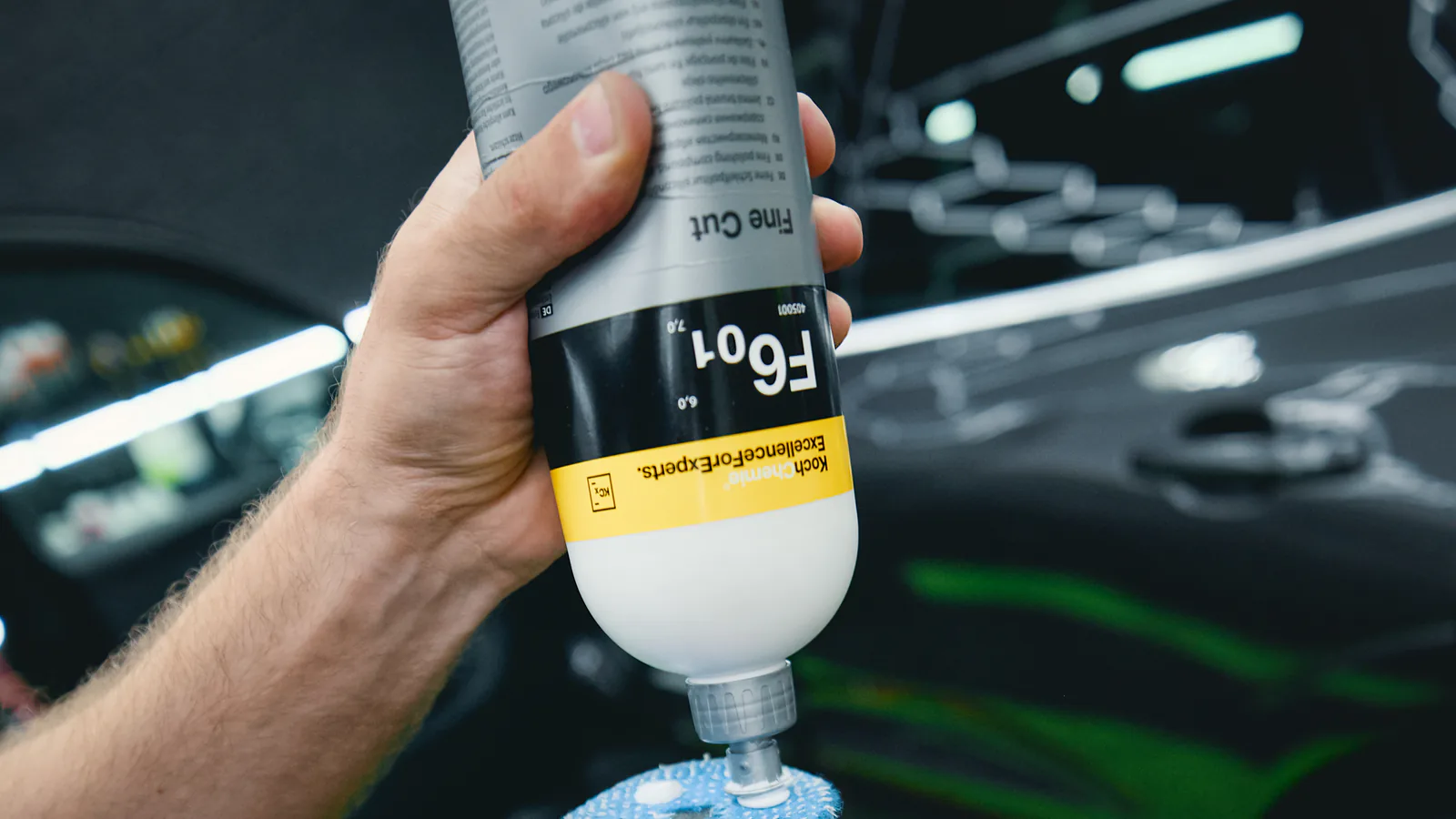
Compare what correction stages actually aim to achieve, how to assess a test area and why scratch-removal percentages cannot determine the right package for every car.
Quick Summary
Key Takeaways
Reading time
8 min read
Location
Warsaw
- •What does a paint polishing stage actually mean?
- •How do one-, two- and three-stage correction compare?
- •When is one-stage correction a sensible choice?
- •When a consistent improvement matters more than every isolated mark
The number of correction stages describes a sequence of work, not a guaranteed percentage of scratches removed. One stage may deliver the improvement you want; two can separate defect reduction from refinement; a third needs a particular reason. Inspection and a test area should determine the choice, rather than the assumption that more is always better. This comparison concerns conventional gloss paint; other finishes need their own assessment.
What does a paint polishing stage actually mean?
A stage is a working combination chosen for an objective: the surface, defect and finish required. It is not one movement of the machine, a wash or a layer of protection applied afterwards. “Three stages” without a description of the operations is therefore insufficient to compare two offers.
Package names are no substitute for a shared explanation. Ask what is counted as correction, what is preparation and what is protection. If one offer counts washing and coating among its stages, its total should not be compared directly with another offer that counts only successive polishing operations. You may be looking at different definitions rather than different quality.
How do one-, two- and three-stage correction compare?
| Option | Objective | When to consider it | Limitation |
|---|---|---|---|
| One stage / one step | Combine light defect reduction with an acceptable finish | When the test area delivers the improvement you accept | More obvious marks may remain |
| Two stages | Separate defect correction and surface refinement | When one combination does not achieve the agreed result | Cannot replace missing paint or guarantee removal of every scratch |
| Three stages | Add an operation justified by a particular issue | After separate assessment and a clear explanation | Neither automatically necessary nor identically defined in all offers |
This table compares approaches, not an identical recipe for all paint. It also does not advertise a confirmed three-stage package or price at One Way Detailing. Review our paint correction service in Warsaw and agree the scope available for your vehicle.
When is one-stage correction a sensible choice?
When a consistent improvement matters more than every isolated mark
One step can be considered for lighter wear where the objective is overall enhancement. The relevant test is whether you accept the result on the paint, not whether a package promises perfection in every light. Some deeper marks may remain despite a substantial improvement in the overall finish. Identify and discuss those before committing to the whole car.
When a gentler approach achieves enough
There is no benefit in adding operations merely because a budget allows them. Once the agreed result is achieved, another step needs a reason. The RUPES system description distinguishes standalone light polishing from refinement after correction; they are different jobs rather than interchangeable labels.
When might two stages be needed?
When the work needed to reduce defects requires separate refinement, or when a single combination cannot achieve the agreed balance. The detailer should be able to explain the purpose of the second stage. A car being black or expensive is not, by itself, an adequate justification for selecting a larger package.
Look at both the remaining marks and the consistency of the surface when reviewing a test area. A greater reduction in one scratch is not the whole result if the finish as a whole does not meet expectations. Distinguish final appearance from “cutting”, which describes part of the process rather than a complete handover standard.
Does three-stage correction mean the best possible result?
No. A third operation should answer a specific need identified during assessment. The number alone tells you little about intensity, workmanship or the marks expected afterwards. Two offers bearing the same label may describe different sequences. Ask for the explanation rather than deciding by the largest figure.
If local additional work or sanding is mentioned, do not assume it is a standard inclusion in every package. It needs its own justification, assessment and agreement. Avoid ordering it as a generic upgrade for sound paint. The aim is a suitable result that can be accepted, not the largest possible number of interventions.
Why is a scratch-removal percentage not a universal measure?
Comparing two percentages would require knowing what was counted, under which lighting and which defects qualified as scratches. A short package description rarely establishes that baseline. Ten light marks and one deep defect are not simply equivalent to a different surface with another defect pattern. A single number therefore cannot fairly describe every car.
Ask instead for an explanation of the intended change: less visible wash marking, a more consistent finish or leaving a particular defect. This helps assess whether the agreed work was delivered. It avoids both promising “90%” before inspection and implying that another correction stage must make every remaining scratch disappear.
How should you assess a test area and before-and-after photographs?
- Look at the same area under comparable light and viewing angles.
- Ask whether the demonstrated result is assessed after appropriate removal of process residue.
- Identify remaining defects as well as the improvements.
- Establish whether other panels share a similar condition and history.
- Confirm the compromise you accept between appearance and the work required.
A photograph with a different exposure, distance or angle is not a complete comparison. The glossiest view does not show every limitation. Equally, a photograph cannot replace inspection: it can document appearance but should not be used to determine scratch depth or the appropriate intensity of correction remotely.
What can a paint thickness reading tell you?
A reading can inform assessment, provided its meaning is understood. A typical measurement on a metal panel covers the coating system, not clear coat alone. Instrument manufacturer DeFelsko explains the differences between measurement methods.
Do not choose a package from one reading on the bonnet. Share previous correction and repair history, and point out damaged edges or panels with uncertain condition. Measurements, inspection and a test area should inform the decision together. No isolated figure promises that polishing can continue without limits.
Which defects will another stage still not remove?
Polishing does not fill the missing material in a chip or recreate layers penetrated by a scratch. It does not repair lifting paint either. Those areas need separate assessment and may need to be excluded from correction. Any such limitation should be part of the agreement before work begins.
The distinction also matters when a mark can only be softened visually. An owner should know whether the proposal means reducing visibility or attempting complete removal. Otherwise, a real improvement risks being judged against a promise that should never have been made without checking the finish.
How should correction stages be chosen before ceramic coating?
Agree the finish you want first, then the preparation and protection. Coating will not automatically improve remaining scratches, nor does its later application require the largest correction package. Read when polishing before ceramic coating is necessary and how to compare polishing and coating prices.
When considering correction with ceramic coating, compare the agreed surfaces and objectives, not just the number of stages. At handover, refer back to the test area and previously identified limitations. This is more useful than pursuing a percentage with no reliable baseline for the whole vehicle.
Questions about paint correction stages
How many scratches does one-stage correction remove?
There is no reliable percentage for every car. The result depends on defect type and depth and how the paint responds. Ask for a test area and an explanation of the marks expected to remain rather than a universal number.
Do two stages mean two passes of the machine?
No. A stage describes an objective and working combination, not one machine pass. Each stage involves the work appropriate for the surface. Ask what the stages mean in the particular offer you are comparing.
Is three-stage correction always the best option?
No. An additional stage needs a worthwhile purpose and suitable paint condition. More stages cannot replace missing paint or guarantee removal of every scratch.
Does a thickness gauge show exactly how much clear coat remains?
That depends on the instrument and surface. A typical reading on a metal panel covers the coating system rather than clear coat alone. It contributes to assessment but is not automatic permission for intensive polishing.
Can some marks remain before ceramic coating is applied?
That can be agreed after assessment and preparation required by the selected system. Coating will not remove the remaining marks. Their presence should be understood and accepted before the service begins.
Article topics