

Car interior detailing: what is included and how do you choose the right scope?
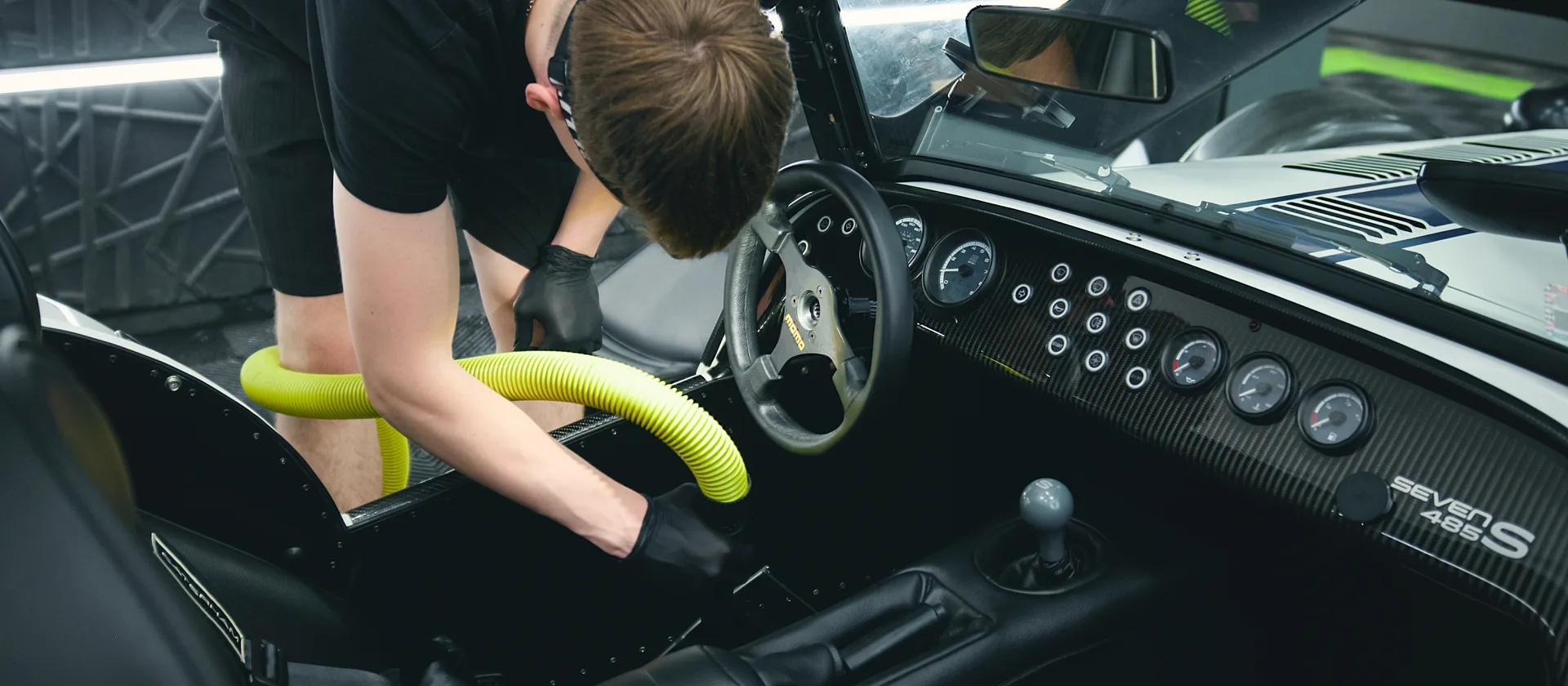
A practical guide to car interior detailing: service levels, the difference between a refresh and deep cleaning, material-safe methods and the final inspection.
Quick Summary
Key Takeaways
Reading time
11 min read
Location
Warsaw
- •Car interior detailing — the short answer
- •What does car interior detailing include?
- •A maintenance refresh, deep cleaning or one specific problem?
- •Maintenance refresh
Car interior detailing — the short answer
Interior detailing is cleaning selected for the actual condition of the cabin and its materials, not one identical process for every car. A basic scope may mean thorough vacuuming and cleaning trim, glass, mats and hard-to-reach areas. An extended scope may include fabric extraction, leather care, boot cleaning or a separately agreed approach to an odour.
The useful question is not how many product names appear in an offer. It is whether the studio identifies the materials, explains its plan and states what cannot honestly be promised before inspection. Loose sand, a drink spill, a display, a headliner and perforated leather all require different decisions. A good quotation therefore starts with questions and a visual check.
What does car interior detailing include?
There is no compulsory package attached to the name “interior detailing”. Read the scope as a list of actual tasks. Publicly listed One Way Detailing options include interior cleaning, leather cleaning and conditioning, and ozone treatment as a separate add-on. The final selection should reflect the vehicle’s condition, its materials and the desired result; the car detailing service in Warsaw provides the current service overview.
A scope discussion usually covers the following areas:
- Floor and mats: removal of loose dirt, cleaning along edges and assessment of stains.
- Seats and rear bench: a method matched to textile, leather, synthetic upholstery, Alcantara or mixed finishes.
- Dashboard, doors and console: careful cleaning of trim, switches, gaps and high-touch surfaces.
- Glass and mirrors: removal of interior film without leaving a greasy finish.
- Boot: vacuuming and cleaning only when it is part of the agreed package.
- Optional details: upholstery extraction, leather care or odour work where the diagnosis supports it.
This list does not mean every part should always be wet-cleaned or coated. Sometimes the safer choice is to limit moisture, preserve the factory matt finish or stop before an aggressive attempt to remove an old discolouration.
A maintenance refresh, deep cleaning or one specific problem?
Choose the scope for the goal, not for the most impressive package name. A regularly maintained car may only need careful vacuuming, glass and high-touch areas. A vehicle after winter, intensive use or a spill may need targeted work and extra drying. An odour with no known source is a diagnostic task, not merely a reason to perfume the cabin.
Maintenance refresh
This is sensible when there are no widespread stains or damp areas and the goal is to restore order. Sand, dust, crumbs, glass and touch points take priority. It supports regular care, but it should not be presented as full upholstery extraction.
Deep cleaning of materials
Textile extraction or leather work requires material identification, a test in an inconspicuous area and a drying plan. Not every stain can be removed completely. A dye may have penetrated the material, while earlier household chemicals may have fixed the mark or changed the colour. A responsible studio considers that risk before increasing chemical or mechanical action.
Removing an odour at its source
An odour can originate from a drink under the carpet, a damp mat, food residue, smoke or contamination hidden from normal view. The source must be found and the affected material cleaned first. Covering it with a strong fragrance does not solve the problem and may make the result harder to assess.
How is the method matched to upholstery, leather and trim?
A safe method follows the material and the vehicle manufacturer’s instructions, not a universal “strong cleaner”. Modern cabins combine textiles, coated leather, synthetic upholstery, piano-black trim, screens, rubber and delicate printed markings. The same chemical should not automatically be used on all of them.
The official Tesla interior-cleaning instructions offer a useful example: the manufacturer recommends a soft cloth, a mild cleaner and an inconspicuous-area test, while giving separate restrictions for glass, displays, lights and seats. It is not a universal manual for every make. It does show why a detailer should check guidance for the specific vehicle.
- Textile upholstery: vacuum first, then treat the stain in a controlled way; excess moisture increases drying time.
- Leather: identify the finish and clean gently before applying compatible care.
- Screens and piano black: clean, soft tools and minimal pressure reduce scratching and streaks.
- Headliner: restrained work is important because the visible fabric is bonded to layers above it.
- Switches and electronics: apply product to the tool instead of spraying it freely into gaps.
Tell the studio about previous leather recolouring, upholstery repairs, fabric protection, a screen film or household products already used on a stain. That history changes how the surface should be tested.
What should interior detailing not promise?
Professional cleaning can improve cleanliness and appearance, but it is not a repair for every defect. Worn leather, a burn hole, cracked plastic, a detached headliner or permanent dye transfer may require repair, restoration or part replacement. Cleaning cannot recreate missing material.
Be equally cautious about a promise to remove every smell without identifying its source. If liquid has reached beneath the carpet, cleaning the visible surface alone may not be enough. If moisture keeps returning, a leak or blocked drain may also need investigation. A good service draws a clear line between cleaning and repair.
Does ozone treatment replace interior cleaning?
No. Ozone treatment does not replace rubbish removal, vacuuming, extraction or removal of an odour source. It may be a separately agreed stage performed under controlled conditions with the cabin unoccupied, but it should not be used to disguise an undiagnosed problem.
The US Environmental Protection Agency states that inhaled ozone is harmful, ozone generators should not be used in occupied spaces, and at concentrations that meet public-health standards ozone has limited potential to remove many indoor contaminants. The EPA also notes that high concentrations used in unoccupied spaces require conditions that prevent exposure of people and pets and may affect some materials.
The practical conclusion is straightforward: ask why ozone is being proposed, what will be cleaned beforehand, how the vehicle is controlled and ventilated, and when it is safe to collect. Do not enter the cabin while the equipment is operating, and do not treat the smell of ozone as evidence that the interior is clean.
How long does interior detailing take?
There is no single reliable duration for every vehicle. Timing depends on cabin size, the amount of loose property and dirt, upholstery type, the number of tight spaces and whether wet work is required. Inspection and safe drying matter just as much as the active cleaning time.
Photos and a description of the main issue help before booking, but a picture cannot reveal moisture beneath a mat or communicate an odour. The final scope may need confirmation when the car arrives. If you need the vehicle back at a fixed time, say so before selecting the package. A shorter window may require a narrower scope; it cannot make materials dry faster.
How should I prepare a car for interior detailing?
Remove documents, cash, electronics, glasses, medication, cables and loose belongings. Empty door pockets, compartments and the boot if they are included in the cleaning. It is best to remove child seats; harnesses and safety components should only be cleaned in accordance with the child-seat manufacturer’s instructions.
You do not need to vacuum before arriving. Instead, prepare a short priority list: where the stain is, when it appeared, what has already been used on it, where an odour might come from and which areas should not be touched. The separate guide on preparing a car for a detailing appointment provides a broader checklist.
When is interior detailing worthwhile?
The right moment is not a fixed date. It is when routine vacuuming no longer addresses the problem or the vehicle needs careful preparation for an important next step. Frequency depends on use: an occasional car, a family vehicle, a company car and one parked outdoors every day collect very different kinds of contamination.
After a demanding season or a spill
Winter can bring more water, sand and road residue into the cabin, while long summer trips often leave crumbs and a busy boot. Not every case requires deep cleaning. If a mat stays damp, a stain appears or liquid reaches a gap, an early assessment helps select targeted work. Avoid applying several unrelated household products first, and tell the studio exactly what has already touched the stain.
Before a sale, lease return or important journey
A clean cabin makes honest photographs and a clear assessment of the materials easier. Plan ahead when extraction and drying may be involved. The goal is not to hide wear; it is to present the car clearly and remove contamination that can be cleaned safely.
After buying a used car
This is a useful time to reset the interior and understand its actual condition. Set priorities first: touch points, compartments, upholstery, boot or odour. If something appears damaged, decide whether it needs restoration before cleaning. That distinction prevents a repair problem from being attacked with progressively stronger chemicals.
How do you inspect the result when collecting the car?
Inspect the cabin in good light and without rushing. It should be clean, but it does not need to shine. A factory-matt dashboard should not become a greasy surface that reflects light into the windscreen. Look at the glass from several angles, then check seat rails, console gaps, mats and the priority areas identified before the work.
Ask which stains did not disappear fully and why, which surfaces received protection, and when the car can be used normally after wet cleaning. If any material remains damp, request ventilation instructions. A good handover does not hide limitations; it briefly explains what was done.
Interior presentation is especially important before sales photos or a vehicle assessment. Read when detailing before selling a car makes sense and how to plan detailing before a lease return.
How do you choose an interior-detailing scope without overpaying?
Begin with the result you actually need. If sand and dust are the problem, do not automatically order full wet extraction. If a seat has an old stain, show it before the quote. If an odour is the concern, ask for its source to be investigated rather than choosing a treatment by name.
- Describe how the car is used and name the three most important problems.
- Ask for a list of surfaces and tasks included in the package.
- Confirm whether extraction, leather, the boot and odour work are included or optional.
- Ask about limitations, risk and the expected condition at collection.
- Compare offers by scope and communication, not only by package name.
If you are still comparing providers, use our guide to choosing a detailing studio in Warsaw. At One Way Detailing, the interior-cleaning scope can be discussed against the car’s condition so that the booked option reflects the actual need. If anything is unclear, contact the studio before your appointment and send photos of the problem areas.
Article topics