

Headlight and lamp PPF — is it worth it?
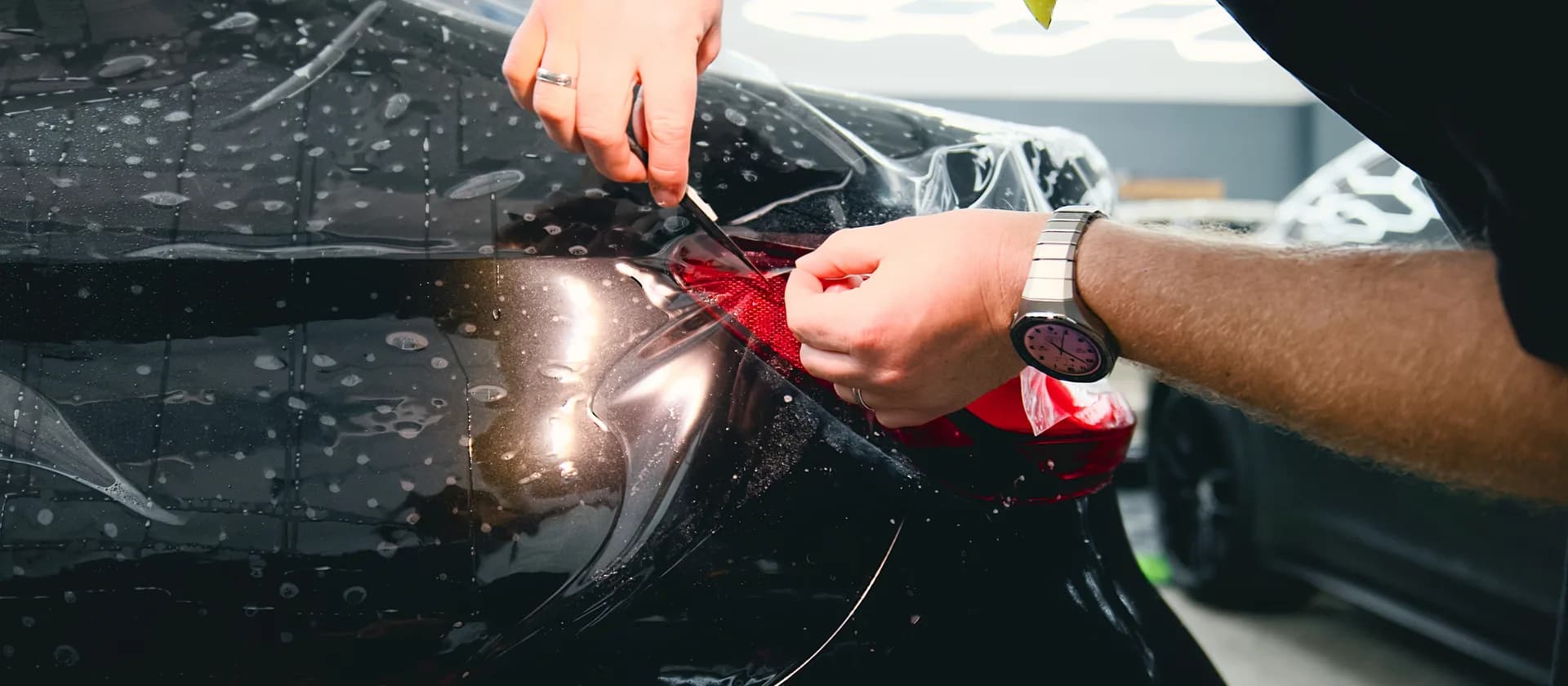
A practical guide to protecting headlights and lamps with PPF: benefits, limits, light output, installation, care and replacement.
Quick Summary
Key Takeaways
Reading time
11 min read
Location
Warsaw
- •Is PPF on headlights worth it?
- •What does PPF protect headlights and lamps against?
- •What can lamp PPF not repair?
- •Does headlight PPF reduce light output?
Is PPF on headlights worth it?
Headlight PPF can be worthwhile as a clear, replaceable layer that absorbs part of the minor impact, scratching and everyday wear otherwise taken by the lens. It is particularly relevant for modern, costly lamp units, cars that spend a lot of time on fast roads, and owners who want the front lighting protected alongside the paint. It is not an invisible shield, however: a large or fast stone can still damage both the film and the lens beneath it.
The decision should follow an inspection of the lamp, its material and any earlier repairs. A smooth new lens is a very different substrate from a lamp that has been aggressively sanded, is starting to crack or has a failing surface coating. “Is it worth it?” is therefore not just a question about the price of film. Suitability, installation quality, optical neutrality and the prospect of safe removal all matter.
What does PPF protect headlights and lamps against?
Front lights sit directly in the path of sand, insects and small debris thrown up by traffic. Rear lamps receive fewer stone strikes, but they still collect wash marks, light abrasion and scratches around the boot opening. A suitable film places a replaceable layer over the smooth lens, leaving part of that routine wear on the PPF rather than on the original surface.
XPEL’s official headlight-film page describes a dedicated product intended to guard against scratches, chips and UV exposure. This confirms that headlight film is a distinct product category; it does not mean that One Way Detailing uses that brand or that all films perform identically. Product specifications, intended substrates and warranty terms belong to the exact system being installed.
Film may also make future maintenance more manageable because a damaged sacrificial layer can sometimes be replaced before work on the lens itself is considered. That benefit remains conditional. If an impact penetrates the material, a pressure washer lifts an edge, or the lens was already unstable, the lamp needs a separate inspection.
What can lamp PPF not repair?
PPF is not a headlight restoration treatment. It cannot remove yellowing within the plastic, deep scratches, stress cracks, leaks or condensation inside a lamp. A transparent layer may visually soften tiny surface irregularities, but it cannot return a damaged lighting unit to its original technical performance.
Film does not replace beam alignment and cannot repair a burned module, broken mounting point or incorrect light pattern. A lamp that mists up, bears signs of previous opening or functions differently from the opposite side needs diagnosis before its outer surface is covered. Protection should never be used to conceal a technical fault.
No responsible installer can promise total resistance to every stone. Impact energy varies with the object, speed and angle. The film is there to reduce risk and accept a share of normal wear, not to make a polycarbonate lens indestructible. That distinction also sets realistic expectations when the film is inspected later.
Does headlight PPF reduce light output?
A clear film made for headlights is intended to remain highly transparent, while smoked or coloured film intentionally changes transmission and the appearance of the emitted light. Tinted material should therefore not be treated as a purely cosmetic version of the same neutral protection. Film construction, adhesive, thickness, ageing and installation quality can all influence the optical result.
Poland’s current consolidated regulation on vehicle technical conditions specifies required lamp colour, lighting properties and operating conditions, among other matters. It does not provide a simple label saying that every film is legal or every film is prohibited. A prudent starting point is a clear product made for the application, followed by a check that every lamp still works correctly. Questions about a particular vehicle’s roadworthiness should be directed to an authorised vehicle inspection station.
Clear or tinted film for automotive lamps?
For functional protection, clear film is normally the sensible first choice. Its role is to keep the lamp’s appearance close to original rather than deliberately alter its colour. Handover should include more than a glance at gloss: check uniformity, edge finishing and the behaviour of the light on both sides of the vehicle.
Tinted film prioritises styling over optical neutrality. Even when a manufacturer sells it as a lamp product, commercial availability is not the same thing as approval for every car and every market. A shade that looks mild in daylight may still change how a headlight, indicator or brake lamp is perceived at night or in rain. That is why this guide does not recommend a universal tint level.
Can PPF be installed on old or cloudy headlights?
It may be possible, but only after the source of the haze has been identified. Surface contamination, oxidation, internal damage and microcracking can look similar at first glance but lead to different decisions. Applying adhesive film over a flaking or unstable layer can make the appearance worse and future removal more difficult.
If the lamp has previously been sanded or polished, the finishing system and compatibility with the adhesive matter. Smoothness alone does not prove that it is ready for PPF. An installer should examine scratches, crazing, edges, approval marks and the difference between the left and right lamp. Restoration or replacement comes before protection when the unit is not sound.
How should a lamp be assessed before installation?
- Wash and dry it first. Dirt and mineral spotting can imitate permanent haze.
- Inspect it under a focused lamp. Look for chips, cracks, matt patches and traces of previous refinishing.
- Test every lighting function. Compare colour and operation on both sides before any work begins.
- Disclose previous repairs. A replaced lens, paint repair nearby or old film changes the plan.
- Define the objective. Protection without a styling change calls for a different product than intentional tinting.
Initial photographs help both the owner and the installer. They document pre-existing marks and create a fair reference for handover. It is also useful to record film edges and neighbouring painted panels when the lamps form part of a wider protection package.
What does a careful PPF installation on a lamp involve?
The general sequence includes a safe wash, decontamination compatible with the lens, drying around gaps, preparation of the pattern and clean application. Modern lamps often have deep, compound curves, so stretch, edge placement and removal of installation fluid need control. Cutting must never put the lens or surrounding paint at avoidable risk.
XPEL’s official headlight-film installation instructions show that this is a dedicated application involving preparation, application solution, alignment and secure edges. Chemical ratios for one brand must not be copied to another. The installer follows the instructions for the actual system, while the customer should receive clear guidance for the first days and long-term care.
Which mistakes lead to a poor result?
Common failures include dust under the film, distortion caused by excessive stretch, an unfinished edge, trapped application fluid and installation over a failing lens. On a complex lamp, a badly placed pattern edge may remain conspicuous or sit directly in the path of washing pressure. Excessive heat used to chase every imperfection can damage the material or the substrate.
Another mistake is promising that a freshly installed film must look exactly as it will after the system’s prescribed settling period. Minor application moisture may need time, but a large bubble, trapped dirt, lifted edge or obvious optical distortion deserves review. A customer needs specific handover criteria, not a blanket assurance that every defect will disappear.
Lamps alone or as part of a Full Front package?
Headlights can be protected as a small, focused job when the paint is already covered or the lamps are the owner’s main concern. On a new car that regularly travels at speed, combining them with the bonnet, bumper and front wings may provide a more coherent protection plan. Our guide to what a Full Front PPF package includes compares the usual zones, but the precise scope must be confirmed for the actual offer.
The largest package is not automatically the best one. A city car with an already damaged bumper has different priorities from a new motorway vehicle. A useful plan starts with driving conditions, budget and the replacement value of exposed parts. For the wider context, read what paint protection film is and how it is quoted.
How should headlights with PPF be maintained?
Wash the lamps with the bodywork while every surface is cool. Rinse off loose grit first and soften insect residue with a compatible cleaner instead of using a nail or abrasive sponge. Do not direct a pressure washer closely into the film edge and do not experiment with household solvents. Dry the gaps after washing so trapped water does not run back and leave marks.
Care requirements depend on the specific film, so the installer’s product guidance takes priority over generic advice. Our broader routine is explained in how to wash a car with PPF. If tar, resin or mineral deposits appear on a lamp, use only a method compatible with both the film and lens; do not spot-polish without an assessment.
When should lamp film be replaced or removed?
Replacement is sensible when the film has a deep cut, persistent haze, broad discolouration or a lifted edge that collects dirt. One light scratch does not necessarily end its service, but a hard impact calls for inspection of the lens underneath. Age alone does not create one universal deadline: product, exposure, maintenance and substrate condition all affect the decision.
Removal is best left to someone who can choose an appropriate temperature and pull angle for the material and the lamp’s history. A restored lens, unknown coating or earlier damage requires particular care. Once the film is off, the surface should be cleaned and inspected under good light before another layer is considered.
How should the result be checked after installation?
Inspect a clean, dry lamp from close up and several steps away, in diffuse light and with each lighting function active. Compare left and right: colour, dipped-beam cut-off, daytime running lights, indicators, brake lamps and position lamps as applicable. Film should not cover required markings or create obvious optical waves across the active area.
Recheck the edges after the interval specified by the installer. Do not press a dirty edge back down or puncture a bubble. Photograph the issue, note the conditions and contact the studio. Before choosing a provider, use the questions in our guide on how to choose a PPF studio in Warsaw.
Who benefits most from this protection?
- owners of new cars with costly LED or complex lighting modules;
- drivers who spend significant time on motorways and express roads;
- cars receiving a coordinated front-end protection package;
- well-kept vehicles whose clear, original lamps are worth preserving;
- owners prepared to inspect the film and replace it when it becomes worn.
PPF is less convincing when a lamp is cracked, misting or due for repair and the owner expects film to restore it. In that situation, budget should first go toward making the light sound and functional. A stable, working substrate is the correct starting point for protection.
How can you arrange a headlight assessment in Warsaw?
Prepare a photograph of the full front, close-ups of both lamps in daylight, and information about earlier polishing, replacement or film. State whether you are considering the headlights alone or a wider package. Our PPF service in Warsaw explains the broader context, while the Front PPF package helps compare the lamps with neighbouring high-impact zones.
One Way Detailing selects the scope after assessing the individual car. The repository does not verify one price, installation time, film brand or warranty for every headlight, so this article makes no such promise. Contact the studio to verify the substrate, current product and exact scope before booking.
Article topics